How We Avoid Over and Underwatering Our Potted Citrus Trees

Ever since buying a number of tropical and citrus fruit trees to grow in pots, I've struggled with figuring out an ideal watering frequency. Part of this is because they live indoors half the year and outside half the year, meaning they experience an array of conditions, but also because I have found that conventional advice may end one step too soon.

Sometimes I water my trees per recommended standards, and they hold water for a long time. Other times, they dry out almost immediately and start showing underwatering conditions. It wasn't until I really started to pay attention that I made a few more crucial observations that helped me get my watering frequency under control.

Before diving into this one, I want to make two important caveats. First, the following is based only on observations for my own potted tropical fruit trees, which include several types of lemon, lime, mango, longan, guava, blood orange, kumquat, and more. They spend half the year indoors under grow lights and south-facing windows, and half the year outdoors. Second, commentary here is just a theory based on what I've noticed with my trees. Your mileage will vary.

So, with that in mind, let's jump into some observations we've seen over the years!

Read more

How to Deal With Pests in Potted Citrus Trees Indoors

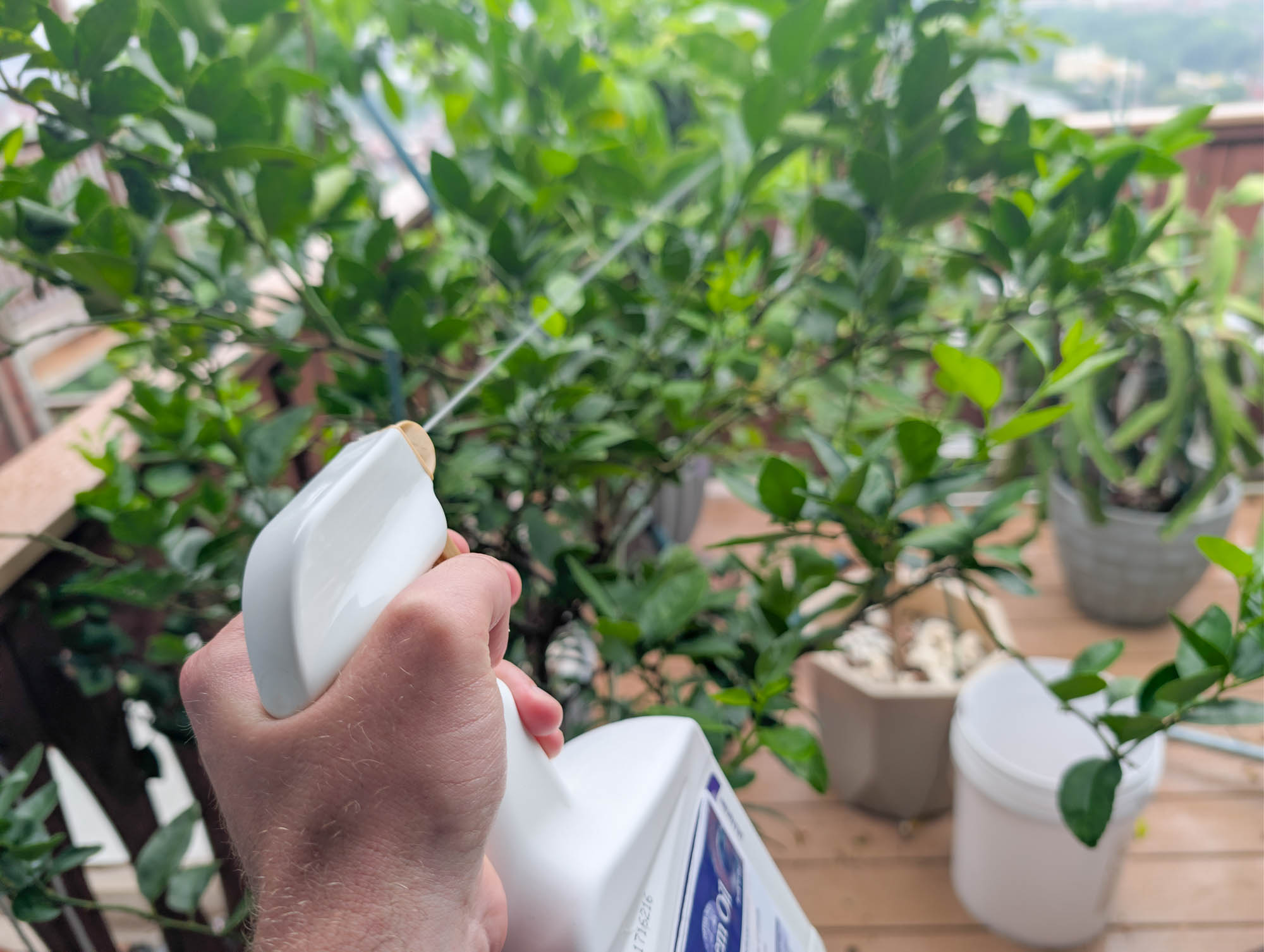
If you're getting into container gardening, at some point you'll have to deal with a pest infestation. If you've landed on this article, then the odds are good you are already experiencing an issue.

Pests in your garden, particularly in citrus trees grown in containers, can be incredibly tricky to deal with. When the trees are outside, you have numerous options such as waiting for a good soaking from the rain, strong winds, a hot day to dry the soil out, or even the ability to apply large-scale insecticide applications.

Indoors, not so much.

Over the years, we've had numerous infestations of our plants once we brought them indoors including gnats, spider mites, mealy bugs, and other soil-based insects. So in this one, we thought we'd share some of the things we have tried to manage each of the populations, and identify which ones we think have (so far at least) worked the best!

Read more

3 Reasons Not to Grow Fruit from Seed (and 3 Why You Should)

Whenever we have a good piece of fruit, I often stop and wonder if I should collect the seeds to try and grow them in future seasons.

That curiosity got the better of me, and I did just that- taking seeds from all manner of fruit (namely fruit grown on trees), saving them in our fridge for cold dormancy, and planting them the following season. Some have been a success (so far), many have failed outright, and the experiment into growing fruit from seed is, admittedly, still ongoing.

But before doing this yourself, you need to stop and think about your plan here, because there are some very good reasons why you shouldn't grow fruit from seed and others why you should.

So if you're okay doing some careful research, finding the right type, and being patient, you may be able to make it all work. So let's break down the pros and cons in this one!

Read more

Growing Exotic Fruits in a Cool Zone – Easy to Hard

I certainly don't like to make my life easy, and this is especially true with my fruit tree collection.

Despite living in a decently warm Zone 6b, where common fruits like apples, peaches, cherry, and others reign supreme, my fruit tree goals look to warmer climates. When I realized that my south facing house was plenty bright indoors in the winter months, making our bedroom a defacto greenhouse, I knew I wanted to try and grow as many tropical fruit trees and other plants in pots and try my luck at having a harvest.

Now that we're a few years into the effort, I thought I'd provide a quick snapshot of how all my trees are doing, and try to identify which ones may be on the easier side to grow in a less-than-ideal climate and others that have been much more difficult.

While a lot of this one is based on my own personal circumstances, including dealing with our local weather, overwintering concerns, and my own habits of watering/fertilizing/etc., this may provide some insight for others looking to do the same!

Please note: This article only features exotic fruit trees and plants we are personally growing or have tried to grow. This article does not feature trees we are not familiar with. So if it is not featured below, we haven't planted it. For reference, we are located in Zone 6b and when plants are brought indoors for the winter. We are fortunate to have robust south/west facing windows plus additional grow lights. Our trees were purchased between 2021 and 2024, and those that have fruited will be noted.

Read more

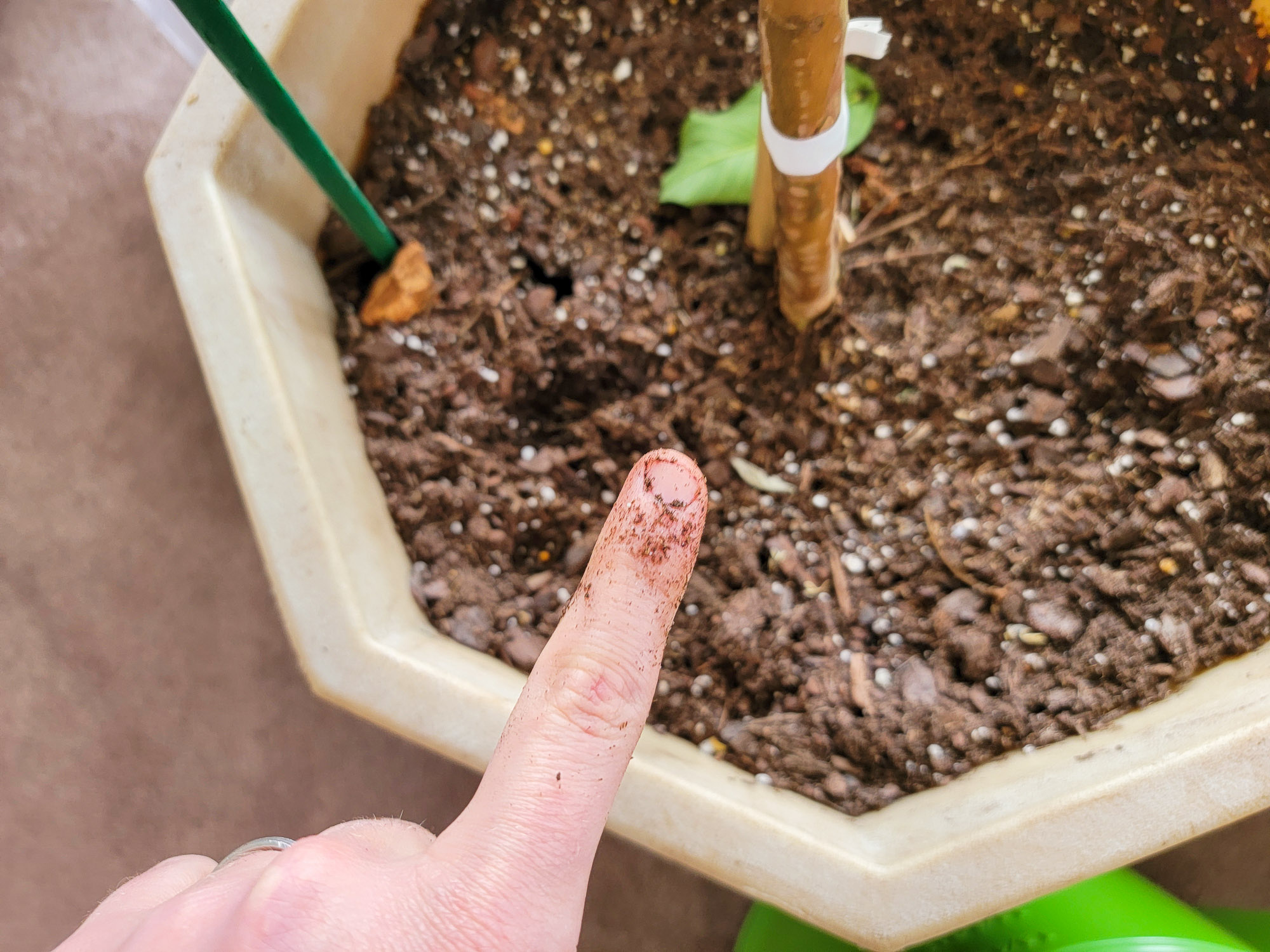
3 Ways to Check if its Time to Water Your Container Trees

For our tropical fruit trees in pots, getting watering right is critical. Water too much and you may trigger root rot and kill the plant. Water too little and you may lose fruit or, in extreme cases, kill the plant. When in doubt, I'd almost always go too dry as most of our trees can manage that scenario far better than being too wet. 

So, that begs the question, when is the right time to water?

Most articles I had read on this topic simply offered a set watering frequency for each specific plant and left it at that. However, general watering intervals are often not good enough due to the many variables that impact our plants. Are your plants indoors or outdoors? Is the humidity high or low? Is it warm or cold? Is the plant big or small? Is it growing vegetatively or producing fruit? All of these can significantly influence how much water they will need.

To get a handle on your trees, you'll need to do some checks!

Read more

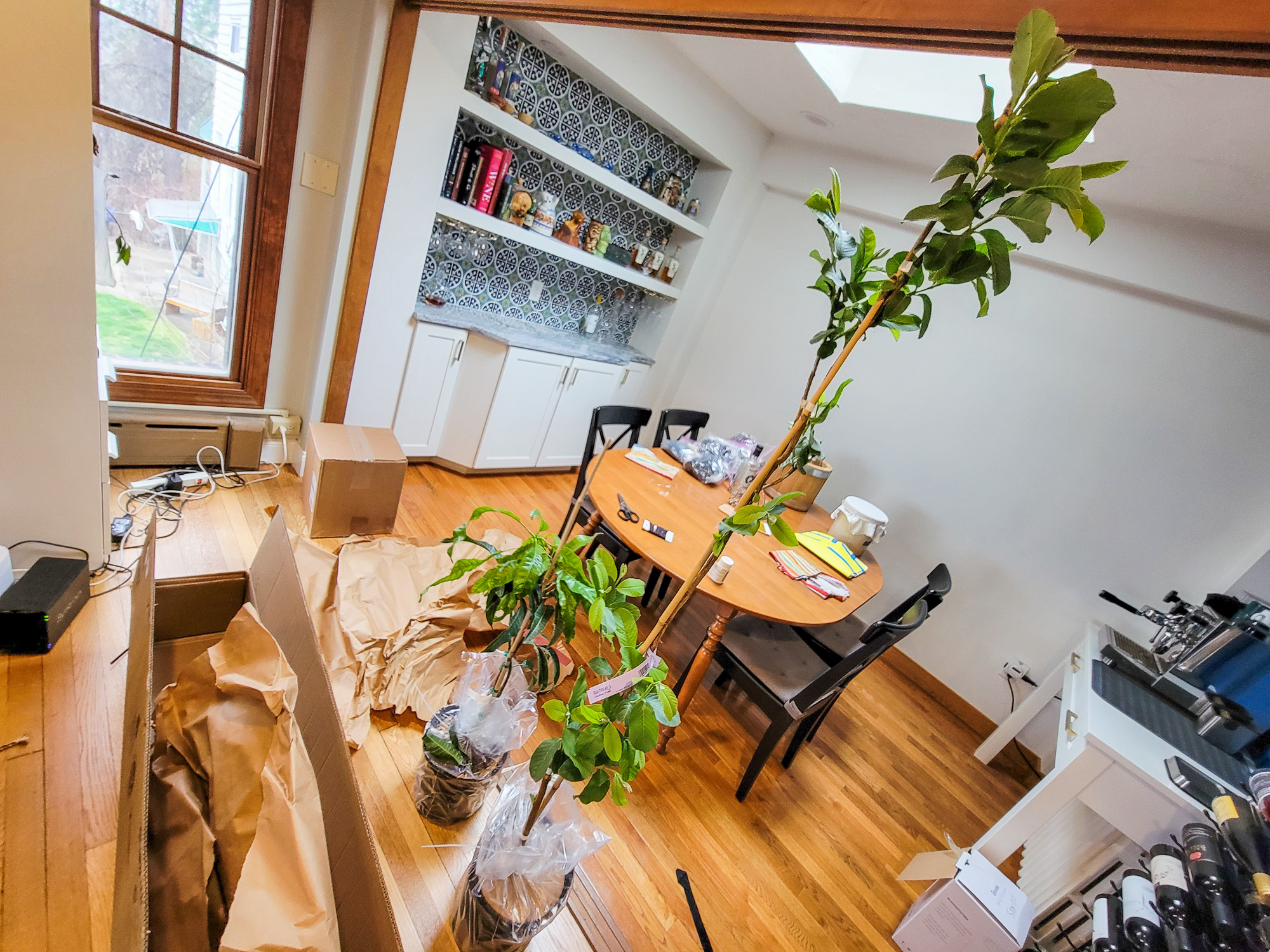
Fast Growing Trees Review – Are The Trees Worth It?

As a collector of unusual tropical fruit trees, I decided to go on a hunt for some rather unique species that are hard to come by.

This search led me to the company Fast Growing Trees, a large online plant store that had, well, seemingly everything available for purchase.

After placing two orders, with five unique trees and/or cacti, I have to say that I have been quite pleased with the company all around!

Read more

What to Do When a Fruit Tree Has Two Sets of Leaves

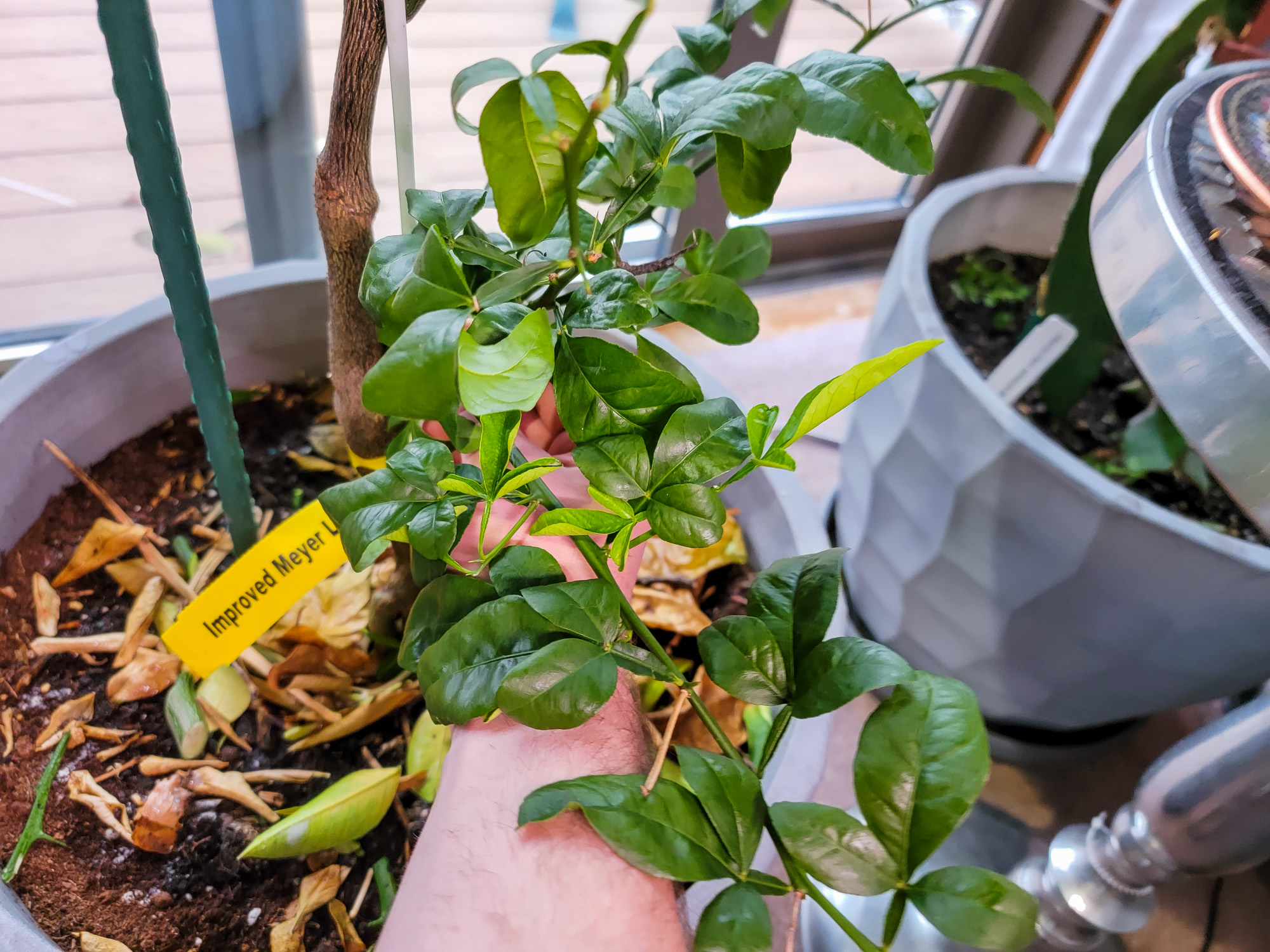
When we bought our Meyer lemon tree, we thought it looked odd. We couldn't quite place our fingers on why, but it amounted to the fact that some leaves and branches seemed different.

One set of leaves had a single lobe, while other sets had three lobes similar to those of a very large clover.

It wasn't until the tree started producing flowers that we realized only specific branches were budding (only the branches with single-lobed leaves), and we investigated further.

As it turns out, we had a huge issue– fruit trees should not have two unique sets of leaves and the rootstock was growing a bit out of control!

Read more

How We Saved a Dying Passionfruit Vine – Container Gardening

I always knew that it'd be a bit of a risk trying to grow a passionfruit vine in a container, but due to our location in the north this tropical plant simply would not have done well in the ground during winter.

The vine was growing quite fine for many months until it started losing leaves at the bottom. The problem got worse and worse and we knew we had to figure out a solution right away. The problem was that any solution we read about could also have been the problem!

So, after testing, we came to a conclusion- we were underwatering. Read more about how we figured this out below.

Note: Please keep in mind that my passionfruit vine is potted and trellised. I bring it inside in the winter as we live in Zone 6b with cold enough winters that would kill the plant. This more than likely influenced the issue that will be described below and may not have the same solution for those growing a plant in the ground.

Read more

How to Grow Passion Fruit in Pots Outside of the Tropics

Although we live in Zone 6b, I knew I always wanted tropical plants that we take in and out of the house seasonally.

For things like fruit trees, this is pretty simple. Plant a dwarf citrus tree in a large enough pot, take it out when the risk of freeze passes, give it a ton of natural light when indoors, and you're (probably) good to go. But what about vines? Many of our favorite tropical fruits, like passion fruit, do not grow on trees but on sprawling vines.

As a passion fruit vine was high on my list of must-haves, we simply found ourselves with an issue of figuring out how to make the sprawling vine work outside of its ideal Zone 9-11. As you may expect, moving a 40+ foot vine in and out as seasons change sounded like a challenge.

Although one answer was simply to acquire native Maypops for planting outside (these are North American passion flowers with cold tolerance down to approximately Zones 6-7 pending varietal), which we also did, I still wanted to have a proper passion fruit all the same. 

So in this one, I wanted to share a bit more about how we planted our vine and, more importantly, share a passion fruit trellis idea that really allowed us to maximize our surface area while still being in a container!

Read more

How to Pollinate a Lemon Tree (and Others) in a Few Simple Steps

When we first purchased citrus trees (such as our key lime, Meyer lemon, and others), one of the first questions we got from other gardeners was simply “you're going to keep them inside?”.

In living in western Pennsylvania, the answer was, of course- it will have to be indoors for half of the year.

The second question that then immediately would follow is “how will the flowers get pollinated?” to which I would reply “by me!” (by hand). After often surprising looks all around I would go on to say that hand-pollinating citrus trees is rather easy because, in all honesty, it is!

So in this one, I thought I would share the simple steps on how to pollinate lemon trees and other citrus trees you may have at home!

Read more