Disclaimers: Our site uses demographic data, email opt-ins, display advertising, and affiliate links. Please check out our Terms and Conditions for more information.
If you are getting into beekeeping, one thing you will have to plan for is treating for Varroa mites. These pests are, well, everywhere, and can cause hive loss if not managed most every season.
I've lost many hives to mites over the years, either due to choosing a poor treatment method or, more than likely, user error in applying correctly outright.
So in this one, I wanted to discuss some of the more common Varroa mite treatment methods out there, share what worked (and didn't work) for my personal situation, and help provide some tips in choosing which method may be best for you as, in all honesty, it really depends!
🐝 Varroa Mite Treatments – A Quick Look
- Varroa Mites Can Destroy Hives: Varroa mites prey on bees and increase in numbers throughout the year- without treatment they can overwhelm hives by winter via transmitted viruses
- Many Options of Mite Treatment: There are many popular methods to treat for varroa mites, including applying formic acid strips, thymol-based gem pads, and oxalic acid
- The Best Treatment is One You Do Regularly: Efficacies of treatments vary; however, consistent application and following instructions matters the most- finding a treatment that works for your apiary, weather, and habits is best
Need to pick up some new beekeeping equipment? Click to shop today.
Why Treat Bees for Varroa Mites?
Before getting into this one, it is probably best to have a quick discussion about why we have to treat for mites in the first place.
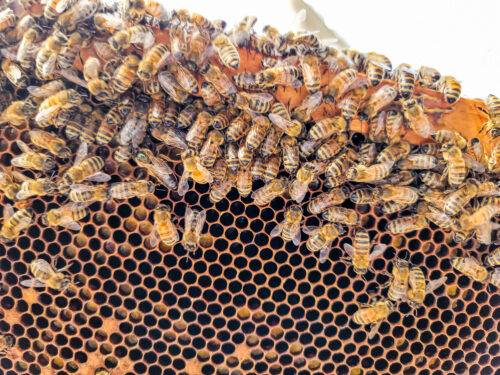
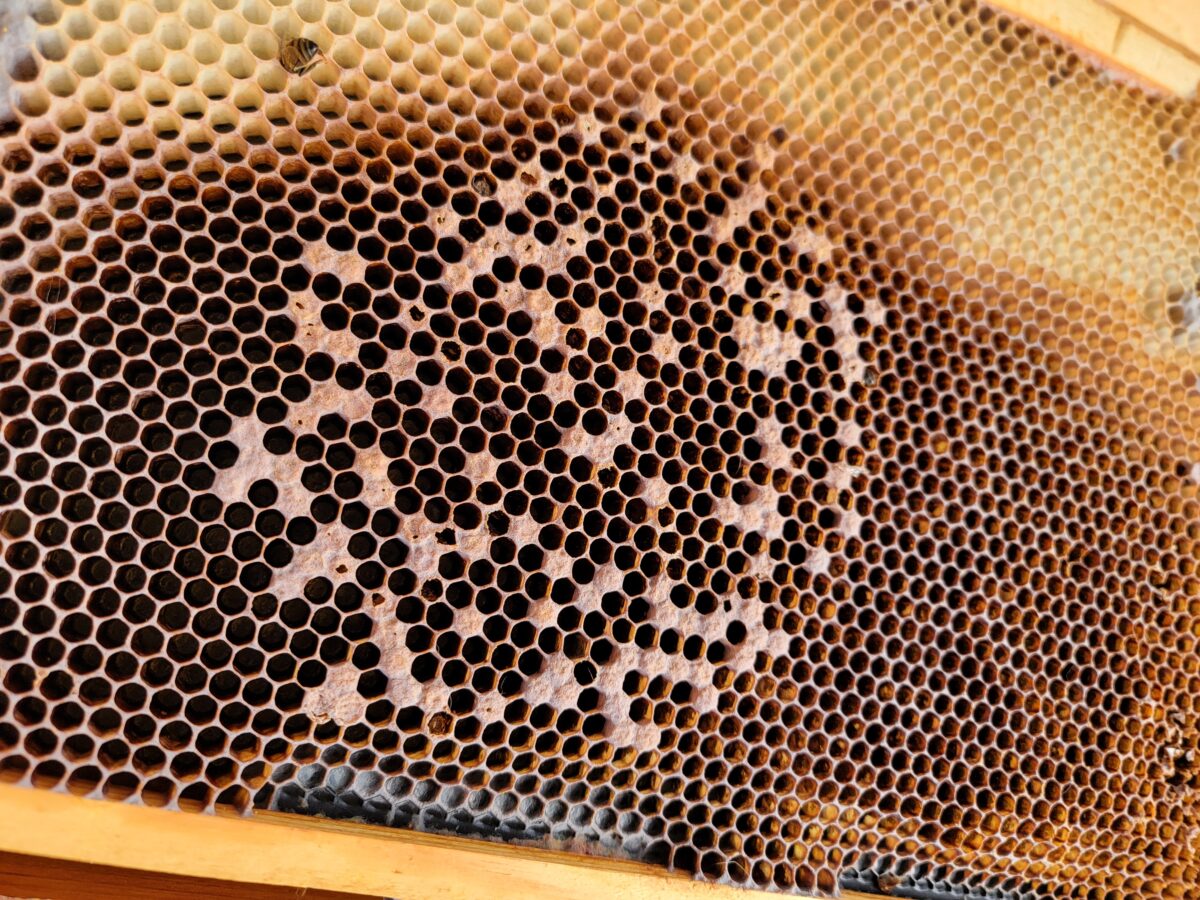
To put it simply, varroa mites are pests that can take out a colony if not managed. These small creatures feed on bees and reproduce in brood cells alongside new bees. Over the beekeeping season, mite populations build up more and more. When your colony population starts to decline for the winter, mite volumes can overwhelm your bees with viruses and other issues that cause colony collapse.
I can safely say I have lost many colonies over the years to mites, and my improper treatment is always to blame.
Many beekeepers like to test for mites using an alcohol wash or the powdered sugar method, with a controlled sampling of bees and counting the mites that fall off, whereas others simply treat for mites mid-season regardless. I'm personally more of the latter, but it is theorized that mites can become resistant to certain treatment methods, which is why testing first is a good idea all the same.
In either case, unless you have a brood break during your season from loss of a queen or a split (as mites tend to reproduce in capped cells- meaning you may need multiple treatments to really hit the mite popualtion right), or are lucky enough to be in a completely varroa-free region (which is rare these days), odds are good you're going to need to figure out a treatment plan for your colonies most every year.
I've tested many varroa mite treatment methods over the years, and wanted to spend a bit of time discussing each and share which one is my current favorite method for our four-hive apiary.
Formic Acid
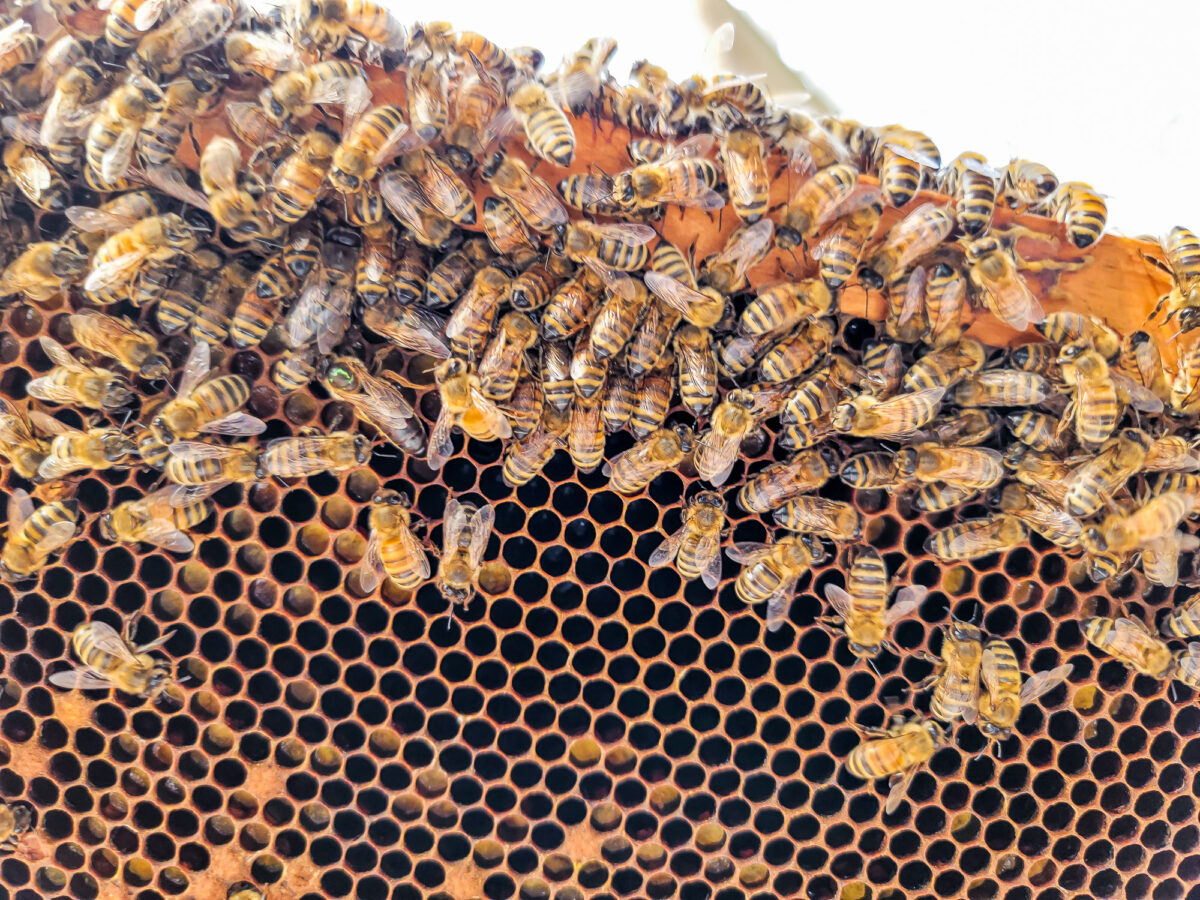
In our first year treating our beehives, we went with formic acid because we had read that the strips are among the most effective ways to mitigate mites in your colonies, as the vapor that comes off the strips can penetrate even capped brood.
Quickly after opening a formic strip, we had a moment of hesitation. While most treatment methods require wearing PPE, the truth of the matter was that even with that, formic acid was quite intense vapor-wise- do not breathe this stuff in at all. While easy to quickly lay two strips across our frames and call it a day, there are many considerations to keep in mind that could make you shy away from formic acid.
First, it is most effective between 50-85°F and must be on the hive for a 14-20 day treatment. If the pad gets too hot, it may release too much acid too quickly, resulting in bee deaths (including the queen). Most sources say this is most important in the first three or so days, as that is when the bulk of the acid is released anyway, if you live in a hot climate this may be hard to do during the treatment window.
- Some put two strips in their hives at once for a 14-day treatment, while others do one strip back-to-back at about 10 days each to try and cover an entire brood cycle. Formic is thought to penetrate capped brood, but you also need to make sure the weather behaves in these windows all the same.
Second, most formic acid products say you can't have your supers on during treatment (although some claim you can- we'd be suspect of that). Storing our supers in the summer months is a bit of a pain, as we don't have much extra room at our house, so keeping them off our hives for multiple weeks at a time for a two-round treatment isn't convenient. We've read some accounts of beekeepers using cardboard or aluminum as a barrier between supers and brood chambers, but we have to admit we are hesitant, even if it sounds like a reasonable idea.
Finally, you need to be prepared with a ventilation plan for this one as well, including opening all entrances and perhaps even cracking an upper box. Again, you want acid to penetrate the brood cells, but you also need to prevent too much build-up in the hive- especially if it is hot out.
In our first year using this, we had one hive that seemed to lose its queen after treatment. Our other hives that didn't lose their queen seemed to do quite well during winter, although we did have one hive collapse in what we believe to possibly have been mites as well. All told, this one was fine, but the pads' harshness was something we wanted to avoid.
Thymol-Based Pads
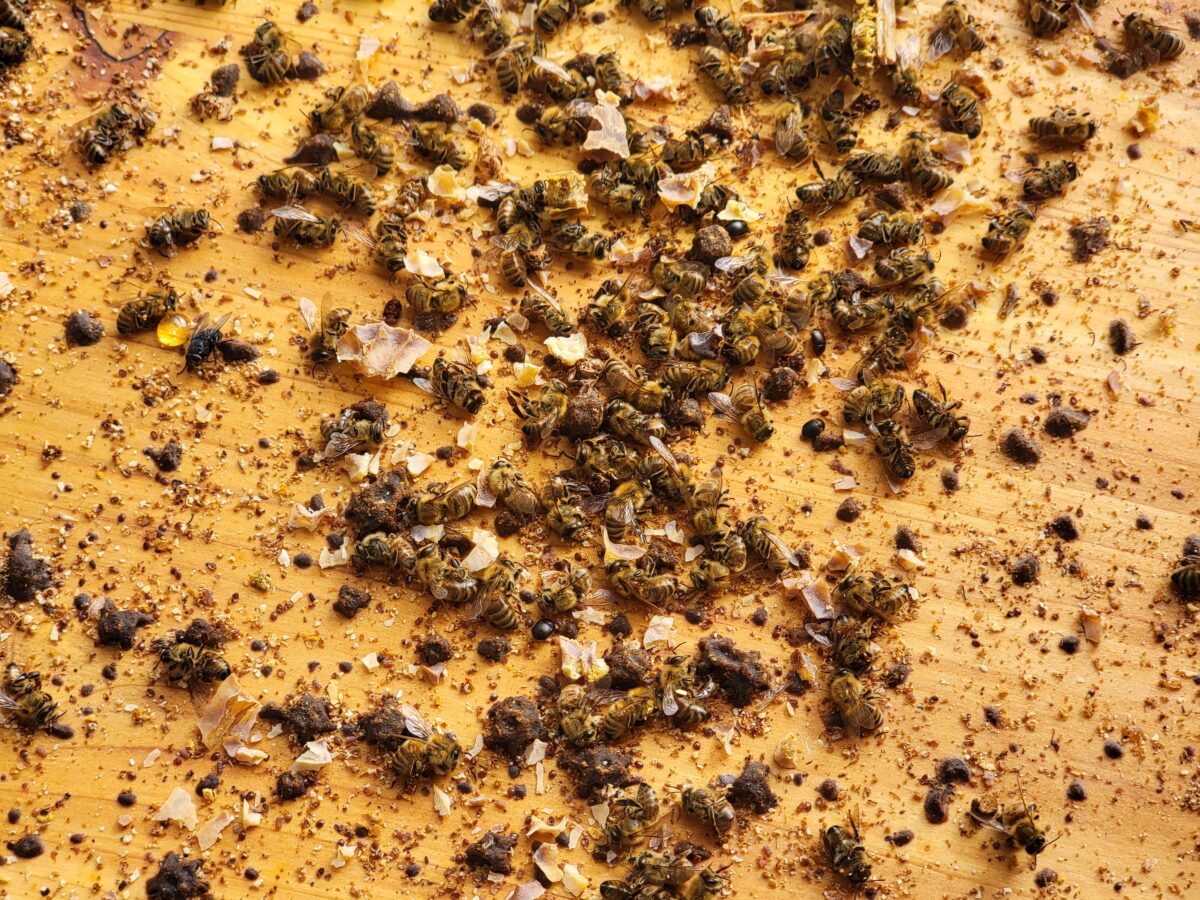
In our second year treating our hives, we decided to go with a thymol-based treatment like Apiguard. These use a slow-release thymol miticide that, much like formic acid, is not intended to be used during honey flow- so the same concerns as above apply with regard to having your supers off your hive.
The real benefit of thymol-based products is that they tend to be effective over a much broader range of temperatures (often 60-100 °F) and are effective as bees disperse the gel throughout the hive after moving over the pad, killing both on direct contact and from the resulting vapors.
Much like formic acid, you need to apply two pads spaced out over a brood cycle (this one doesn't seem strong enough to penetrate capped brood at all), and it requires a bit of patience. But because the chemicals in this one are less harsh, it is even easier to use than formic-based products in our experience.
In our first year using this, we had one hive that seemed to die after treatment. While thymol is supposed to be less harsh on the colony with regard to bee losses, we think this one may have been because we applied the treatment later in the season when the hive was already weak and perhaps already failing. Still, we're not entirely sure, and the multi-week treatment process is still fairly concerning due to our super storage issues mentioned above.
Oxalic Acid – Drip, Vaporizer, or Strips

After trying these two, we moved on to oxalic acid. This one can be applied in three different ways- the dribble method (mixing oxalic acid crystals in a simple syrup and applying them directly to the bees in the brood chamber), the vaporization method (heating up the crystals via a special tool that is inserted into the hive), or via strips (which are bent and inserted between frames in the brood chamber). There are pros and cons to each, depending on your setup and preferences.
Oxalic acid vaporization (OAV) is often favored because it can be done quickly. Take off your supers, put oxalic acid crystals into the vaporizer, put it in the hive, turn it on, let it run for a few moments, and you're done. Supers typically only need to be off the hives for a few minutes while the vapor recrystallizes on the bees, and you're seemingly good to go.
The downsides to vaporization can be many. You need the equipment, which can be quite expensive for hobby apiaries. You also have to wear more PPE, including an acid-approved respirator. All of this adds up to a considerable purchase for mite treatment and may not make sense for small apiaries (like ours). Likewise, as the vapor doesn't do a great job penetrating capped brood, many who go this method tend to treat multiple times over a two-week period to catch all of the open brood chambers in a laying cycle- adding time despite otherwise being fast.
If you are more of a hands-off beekeeper, or have a smaller collection of hives, OAV may not make sense, and is the only method listed here we personally haven't tried yet for reasons previously mentioned.
Oxalic acid drip is typically favored because it is almost as fast as vaporization, but requires far less equipment. You just need a syringe, dedicated mixing equipment (never put oxalic acid in anything that would have food!), PPE like gloves, a particulate mask, and glasses, and the ability to heat up a simple syrup and mix in the crystals. Open the hives, find the brood cluster, and dribble the prescribed amount between each frame, and you're good to go.
Another reason this one is favored is that it is often applied during the winter months when there is no brood. Just open your hives quickly, find the brood cluster, apply the drip, and you're done. Also, in being winter, your supers should already be off the hive, so any long-term risks of the syrup and acid crystals finding their way into the honey supers are already mitigated.
That said, if you hadn't controlled your mite population well enough in past years, you may already have hive issues before reaching your next winter, so it's always a risk waiting throughout an entire season, and many beekeepers do the dribble method a few times over the course of the season to cover an entire brood cycle (just like the vapor method).
Finally, we have oxalic acid strips. These are coated, bendable strips that can be inserted between frames in the brood chamber. Most strips are seemingly okay for use with supers on, as the oxalic acid does not penetrate the wax in the chambers and is instead only picked up by bees walking directly on the strips. Strips can be placed once and left undisturbed for about seven or eight weeks. All you have to do is open the package, bend the strips, and insert them into your hives (about one strip per 2.5 frames was recommended on our package).
The downsides to this one is that oxalic acid strips are not cheap compared to liquid and vapor methods and they are somewhat difficult to remove (they lose their rigidity and break like wet cardboard). So you can see why larger apiaries may trend to the vaporization method, whereas for us with just four hives, the cost of the strips doesn't become too prohibitive, even if it is a more expensive option for the consumables.
Regardless of the method here, you can see why many beekeepers tend to move to oxalic acid over time, and you'll find near-endless debate on what the best method is from here. Some like vapor. Some like dribbling in the oxalic acid syrup. Some treat in the summer multiple times. Some treat in the winter only. We don't want to weigh in on the debates here, but the general consensus is pretty clear- oxalic acid is quite effective when done right.
Our Current Treatment Method – Oxalic Acid Strips
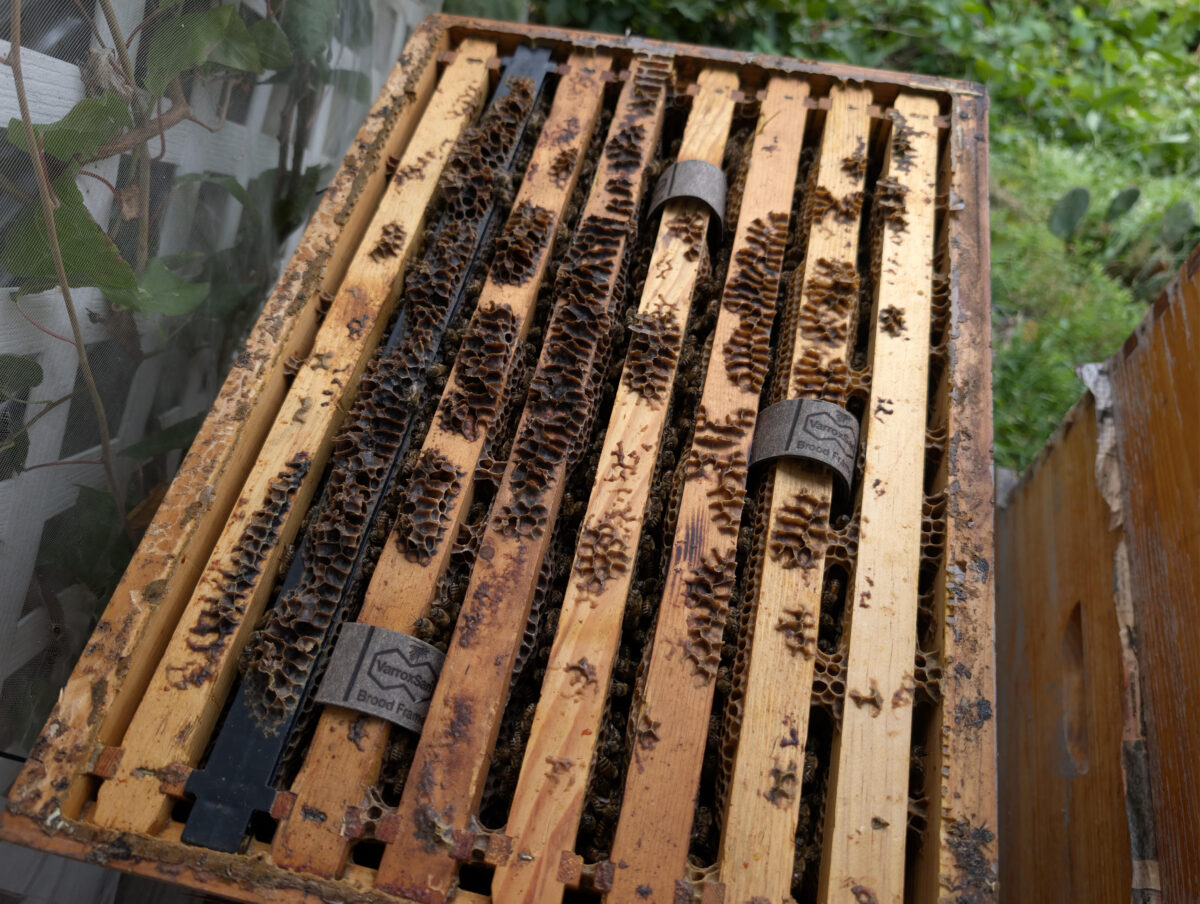
For the longest time, we were hesitant to get on the oxalic acid train for a few reasons.
On the oxalic acid drip side of the spectrum, preparing a syrup feeding felt like a pain, and for those who like to do a one-time treatment in the winter, we were hesitant to disturb our hives in the cold. We are always the biggest risk to our hive's health, and we were (perhaps unreasonably) fearful of these elements.
On the oxalic acid vaporization side, we simply didn't think the cost of the equipment and extra PPE was worth the investment for only having four hives, despite it being, by all accounts, incredibly easy. The costs, when averaged out, just don't make much sense for our small apiary.
Ultimately, we came around to oxalic acid strips primarily because they offer a set-it-and-forget-it approach that seemingly works with supers on. We put the strips in (only adding a couple of minutes of extra work in a standard inspection), wait about two months, come back, take them out (as best as possible at least given how fragile they become at the end), and, theoretically, are good to go with one quick installation. We don't have to worry about multiple treatments to account for brood cycles, and apart from gloves, we didn't really need extra safety equipment, either.
A win-win for low-intervention beekeepers!
That said, what works best for your personal scenario may differ. Do you have a large apiary with many hives? Oxalic vapor may be an attractive option for ease of use at scale. Do you have more storage and don't mind taking your supers off, and want something that is possibly a bit more effective? Formic is still an option, insofar as your region isn't too hot at the time of treatment.
There really is no wrong option when it comes to treating for Varroa mites, apart from doing nothing. The real challenge is finding something that works for your personal situation and sticking to the application requirements for an effective treatment.
Do you have a favor bee hive mite treatment method? Comment below to share!
Start an Apiary Today
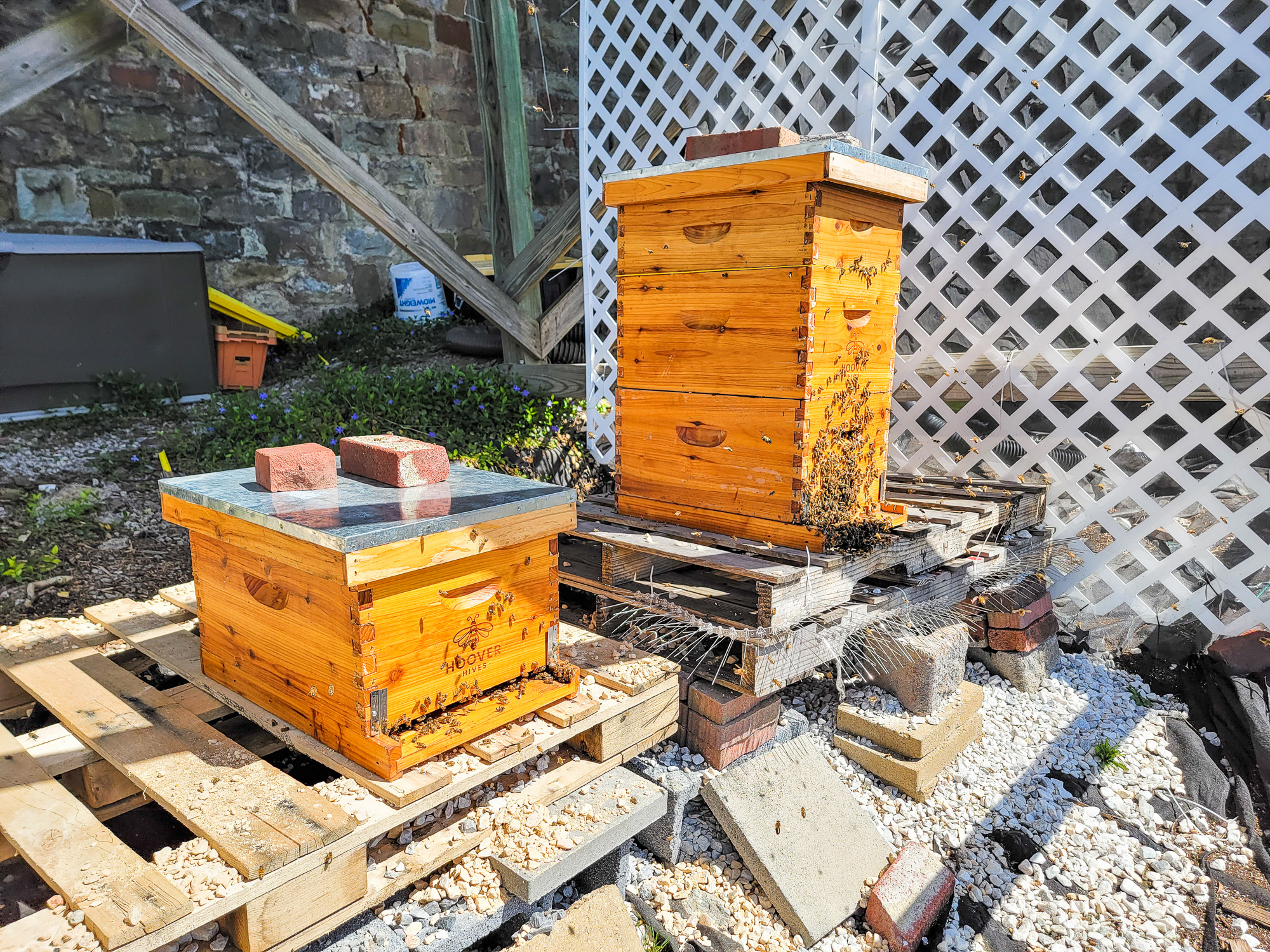
Looking to get into beekeeping? Pick-up preassembled waxed Hoover Hives from Galena Farms. Use discount code HIPSTERHOMESTEADERS to take 5% off your order!