

Disclaimers: Our site uses demographic data, email opt-ins, display advertising, and affiliate links. Please check out our Terms and Conditions for more information.
Although we live in the city, our house is found on a hill with a decent number of trees and other weeds within our neighborhood which, naturally, is often home to several families of deer.
For the most part, the deer had left our little garden plot alone. But every now and again, they come in with a vengeance and decimate our crops. Fruit trees, kiwi vines, hops, you name it, they ate it.
So much like our tests for keeping a raccoon off our deck we tried several things to keep deer out of our garden!
Although this one wasn't as black and white with the results, we do have some thoughts on each of the products we tried. That said, keep in mind you may need to try more than one!
🪴 Deer Repellents for a Garden – A Quick Look
- Deer Are Aggressive: If you have a deer visiting your garden, it is possible they can run through and eat/destroy a number of plants in a quick period of time- so getting a deterrent in place quickly is a good idea
- Consumable or Not: Many popular deer deterrents, like cayenne powder and sprays, are consumables and may lose their effectiveness over time, particularly after heavy rains
- Permanent Solutions: More permanent solutions work to some degree, like fencing and ultrasonic emitters; however, may need adjusted over time
Need to pick up some new gardening equipment? Click to shop today.
Deer-Resistant Plants

Deer-resistant plants are popular in home gardens, as marigold, verbena, lily of the valley, lavender, mint, and more are natural deterrents due to a number of reasons, be it a specific scent, having toxic leaves, bad taste, or prickly leaves/thorns, to name a few.
When looking for plants to add to your garden, doing a sanity check that they have a little bit of deer resistance can go a long way to ensure they, plus other animals, leave them alone.
The downside of resistant plants is that deer seem to dislike them directly, and they typically do not help nearby plants deer like. They don't eat the mint, sure, but it doesn't seem like enough to deter them from eating anything that is literally right next to a mint patch. So unless you're actively looking at a plant that animals don't like to eat, they're not likely to do much even when placed near other plants. Deer just don't seem to care.
Effectiveness: Okay, if only for the individual plants themselves.
Cayenne / Garlic Powders

For deterrents on plants that deer and other animals like to eat, a popular recommendation is applying a topical powder that they dislike, including garlic or cayenne powder.
We've used these in the past for other animals, like squirrels and raccoons, with some effectiveness, as the pungent flavors are naturally unpalatable to many animals. So giving your plants and nearby area a good dousing of garlic powder or cayenne can provide an aromatic deterrent when deer come close. I've even tried pre-made sachets that can be tied to nearby fencing to get the particles at more nose level / closer to the trees the deer like to eat (and not get washed away in rain), with some degree of success.
The downside to cayenne/garlic is that they have a short shelf-life of potency, particularly after ample rain, which may dilute their aromatic properties. So while I do like the sachets themselves because the food is contained and less likely to run off with a bit of water, they still have a limited shelf life that is hard to track, all the same.
Effectiveness: Decent in our experience in a contained area, but re-application concerns exist.
Deer Repellent Spray

Anti-deer sprays are similar to the previous item of cayenne and garlic, as they can contain scents from foods deer do not like or other oils that mimic the natural scent of predators.
Sometimes these have an unpleasant taste, which gets deer to stop eating on impacted plants, whereas others have foul aromas that may help deer avoid an area outright. In our opinion, these aromas travel a bit further than the sachets above (granted, our noses are not nearly as sensitive as a deer's), and, in being a spray, can be used to cover a wider area compared to an individual sachet.
The downside to sprays are the same as cayenne/garlic sachets mentioned above- they have a short shelf-life. So while they may work to some degree, you may need to reapply after a sufficient period of time or, in most cases, rain.
Effectiveness: Decent in our experience in a contained area, but re-application concerns exist.
Fencing
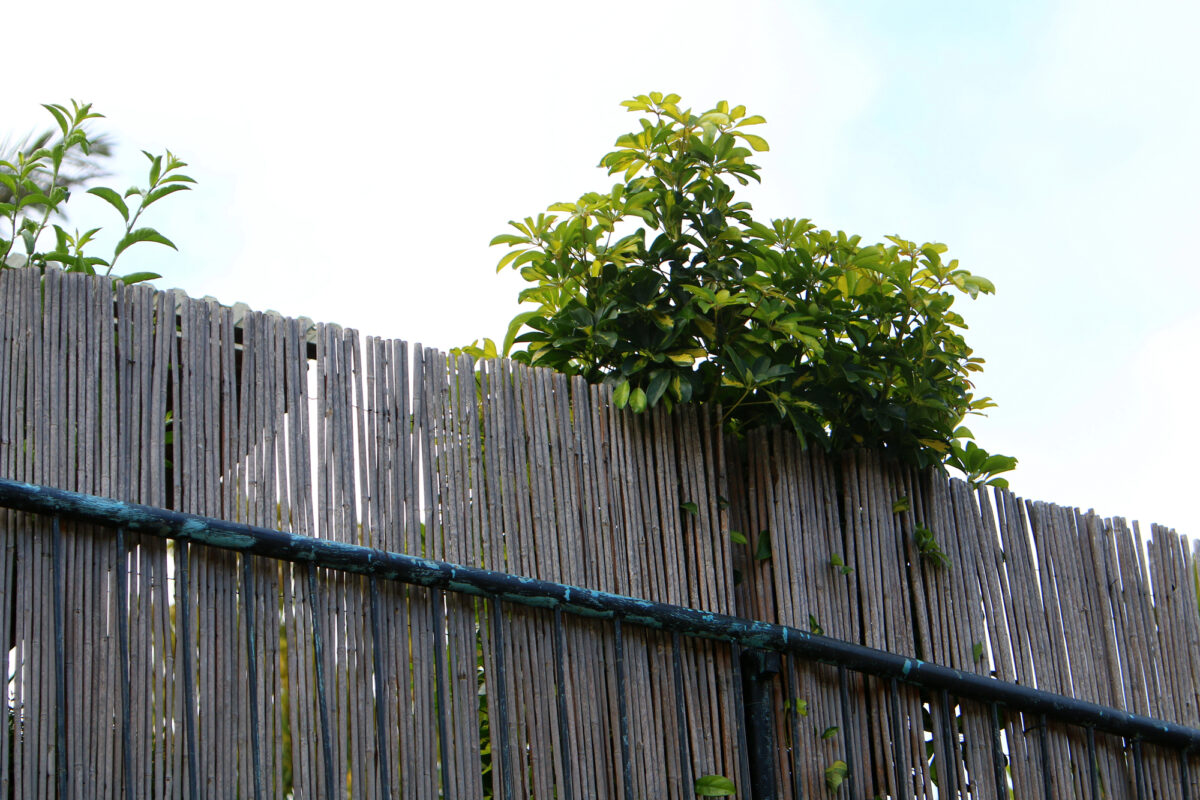
For a more physical solution, you may want to consider putting up a fencing barrier around your plants / fruit trees to help deter deer. The physical barrier, naturally, is a barrier that can help keep deer out of plants if given enough distance/height.
The downside to fencing is that deer are quite large animals, and you would either need quite tall fencing or a big radius around your garden to make a difference (but not too big, as deer can also jump high over some fencing, too). Throw on that trees also expand their canopy with each passing season, and expanded fencing may prove only a short-term gap as your tree continues to grow.
The fencing that I had wrapped around my trees just a foot or two out worked great to keep deer away from the base, but they could still get to some of the lower branches and munch away all the same. So unless you are going quite excessive with a big radius, have plants that are quite low to the ground, or expand the fencing over time, a fence may not fully protect your plants.
Effectiveness: Good if the fencing is tall enough / wide enough radius to prevent deer from accessing outright; however, jumping concerns exist as do eating from a tree's canopy.
- You may also want to consider netting on top of plants as well; however, we haven't tested this one in tandem with fencing yet. As a gut feel, anything that may be near and/or poke through netting is liable to be eaten.
Ultrasonic Devices
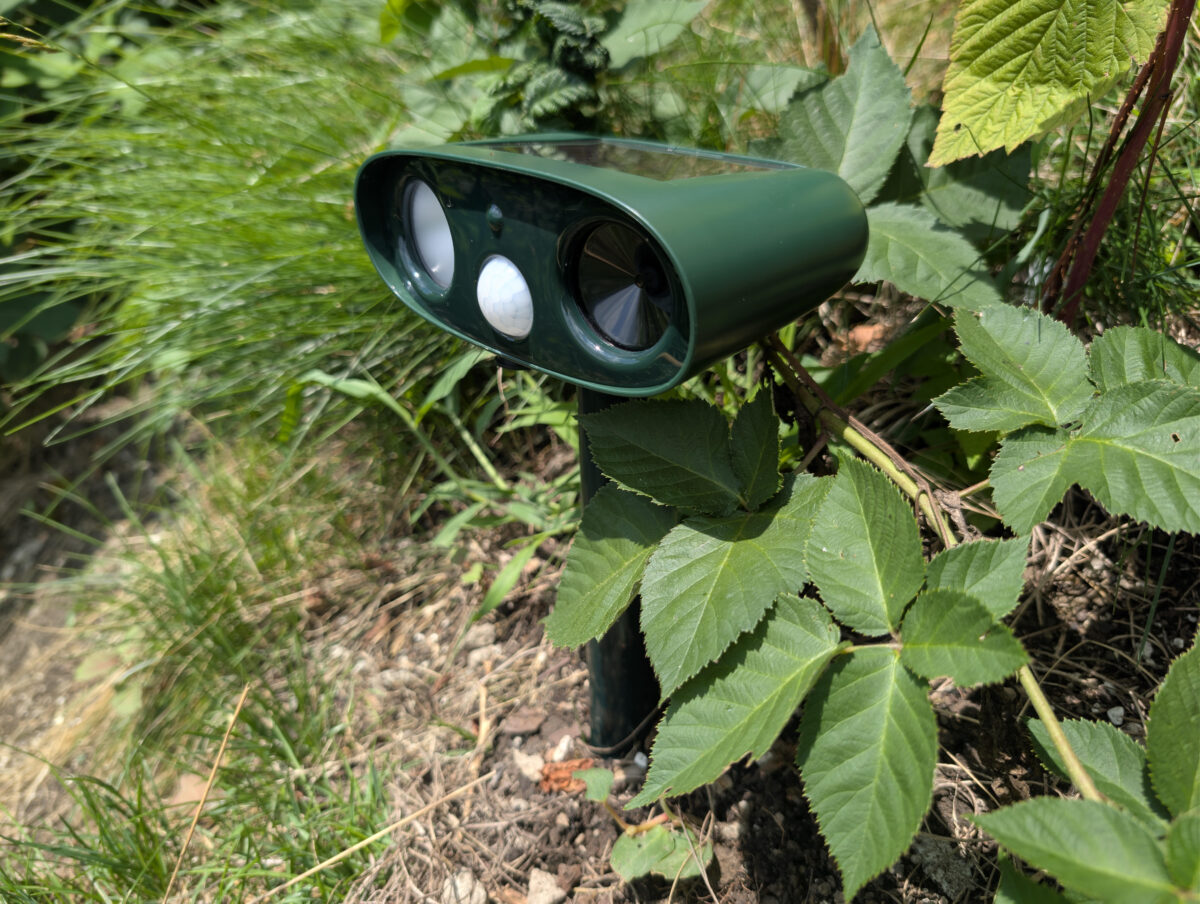
Up until now we've covered chemical and physical deer deterrants, but what about audio/visual ones? Ultrasonic devices are often a multi-sensory tool that detects motion within a fixed area, and when triggered, it activates a high-pitched noise, light, and sometimes both to deter any nearby pests.
These are good devices to have in a garden as they make unpleasant noises and lights that can help encourage deer to scatter. Even better? Many of these devices have built-in solar panels and built-in batteries, so once you set them, they're good to go throughout the day and night.
The downside to noise devices is that they can be annoying to humans when triggered, as lights, ultrasonic noises, and other deterrents may still be perceptible to human senses. So if you are placing them anywhere with human foot traffic, they can get really annoying in a hurry (a neighbor has some in their front yard that trigger every time we walk by with our dog, and it is quite bothersome).
We bought cheaper devices that had no sensitivity adjustments, and to say they trigger at everything, even grass blowing in the breeze, is an understatement- paying more for ones that may have adjustments in this regard could be money well spent if they are set up near living areas. Likewise, over time deer may become accustomed to the noise/lights, so you may have to move their locations over time to keep acting as a deterrent.
Effectiveness: Seemingly good in testing; however, long-term risks of deer becoming accustomed to the sound/lights are potential concerns.
Which is Best? You May Need More Than One
Overall, while I think many of these do work to some degree, you do need to stop and assess which ones are best for your situation, including possibly employing more than one tactic for the best results.
Are you willing to replace chemical and food deterrents periodically as their potency winds down? Or perhaps put up a big/wide enough fence despite the increasing cost? Or can you endure any potential noise or visual stimuli with a mechanical device? You may be the best judge of your preference here.
For me, I personally like noise devices alongside fencing, if only because I can set them once and mostly forget it (I hate wasting money on consumables, after all). But that said, the ultrasonic devices do annoy me when I am in my own garden, and I can hear them even when on my deck 30+ feet away. So while I do like those devices for what they are, I will be expanding my fencing in the future as well for an extra layer of protection.
Physical barriers always win in my opinion, but for deer, it may be only just a start. More than likely, you will need more than one solution for the best results.