
Disclaimers: Our site uses demographic data, email opt-ins, display advertising, and affiliate links. Please check out our Terms and Conditions for more information.
Oh, fruit tree pests, sometimes you're the bane of my existence.
For a few years, I tried treating my fruit tree pests with spray bottles of Neem, insecticidal soap, and horticultural oil, with mixed results. I'd spray, see a slight reduction in pests (notably aphids, mealybugs, and scale). But wait a short period of time, and the bugs would come back with a vengeance, causing particular damage when my citrus trees were brought inside during the winter months.
After going through bottle after bottle of the sprays, which can run north of $10 per bottle for a pre-mixed solution, I went apoplectic on one plant one day that had a mealybug infestation. Squirt after squirt (after squirt), I sprayed them as much as I possibly could, using most of a single bottle, and something interesting happened- I noticed a bigger reduction in the pests than I had before.
It was here that I had a lightbulb moment- it wasn't the sprays themselves that were the problem, but rather that I was likely not applying them nearly liberally enough (or possibly even frequently enough) to make a dent on the pests.
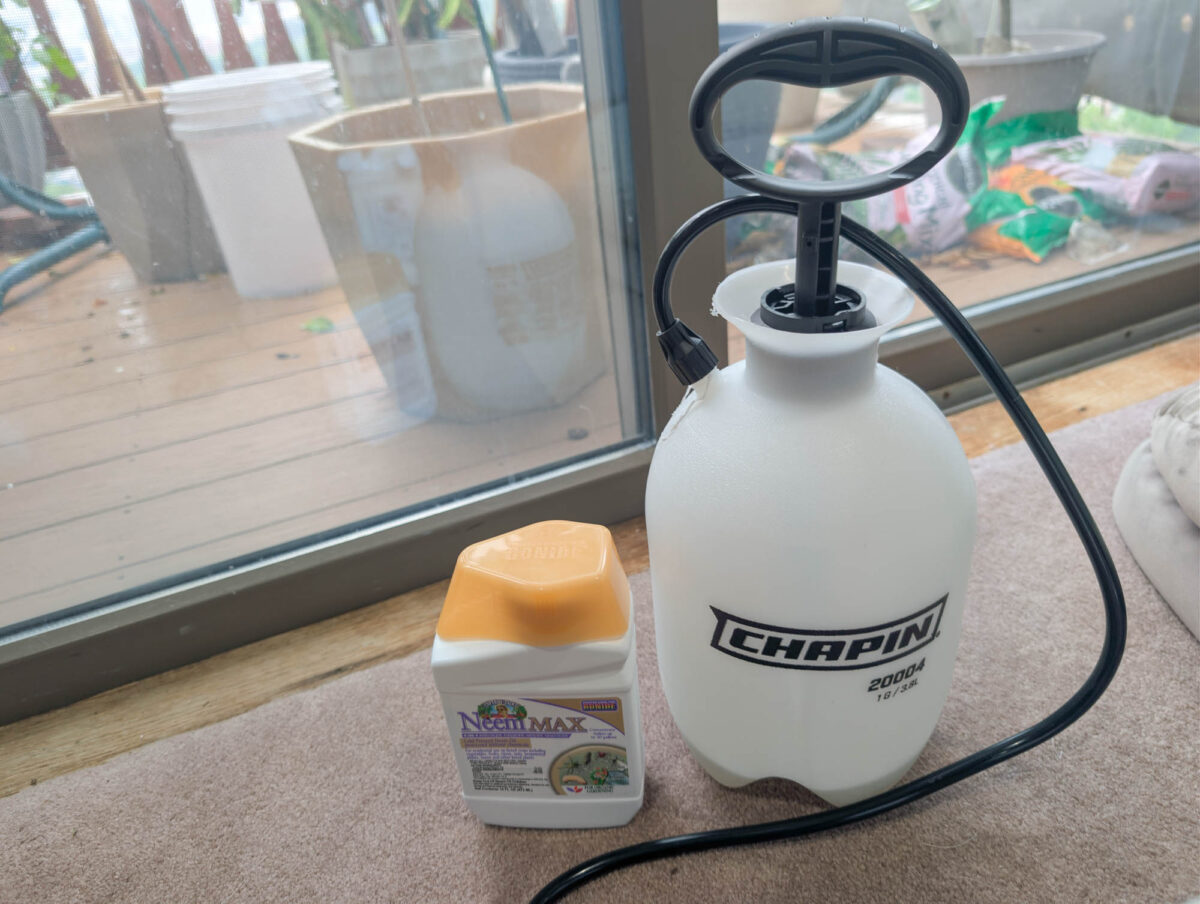
So I tossed the squirt bottles aside, upgraded to an industrial pump sprayer, bought some Neem and horticulture oil concentrates, and really blasted my trees with a good dousing.
The pest population dropped dramatically.
So in this one, let's talk about why squirt bottles may not be getting you all the way there and why upgrading to a proper sprayer is a better option- both for effectiveness and cost.
🪴 Insecticidal Sprays – A Quick Look
- Treating Pests on Fruit Trees: If you're looking to remove pests on fruit trees, you may need to apply treatments like insecticidal soap, Neem, or horticulture oil
- Small Sprayers May Not Be Enough: Pre-mixed solutions in spray bottles are commonly used to apply these chemicals, but often are not used in enough volume to be effective
- Get a Garden Sprayer: Garden sprayers and insecticide concentrates can help increase application volume for significantly less cost per batch than pre-batched bottles
Need to pick up some new gardening equipment? Click to shop today.
Why Premade Sprays May Not Be Enough
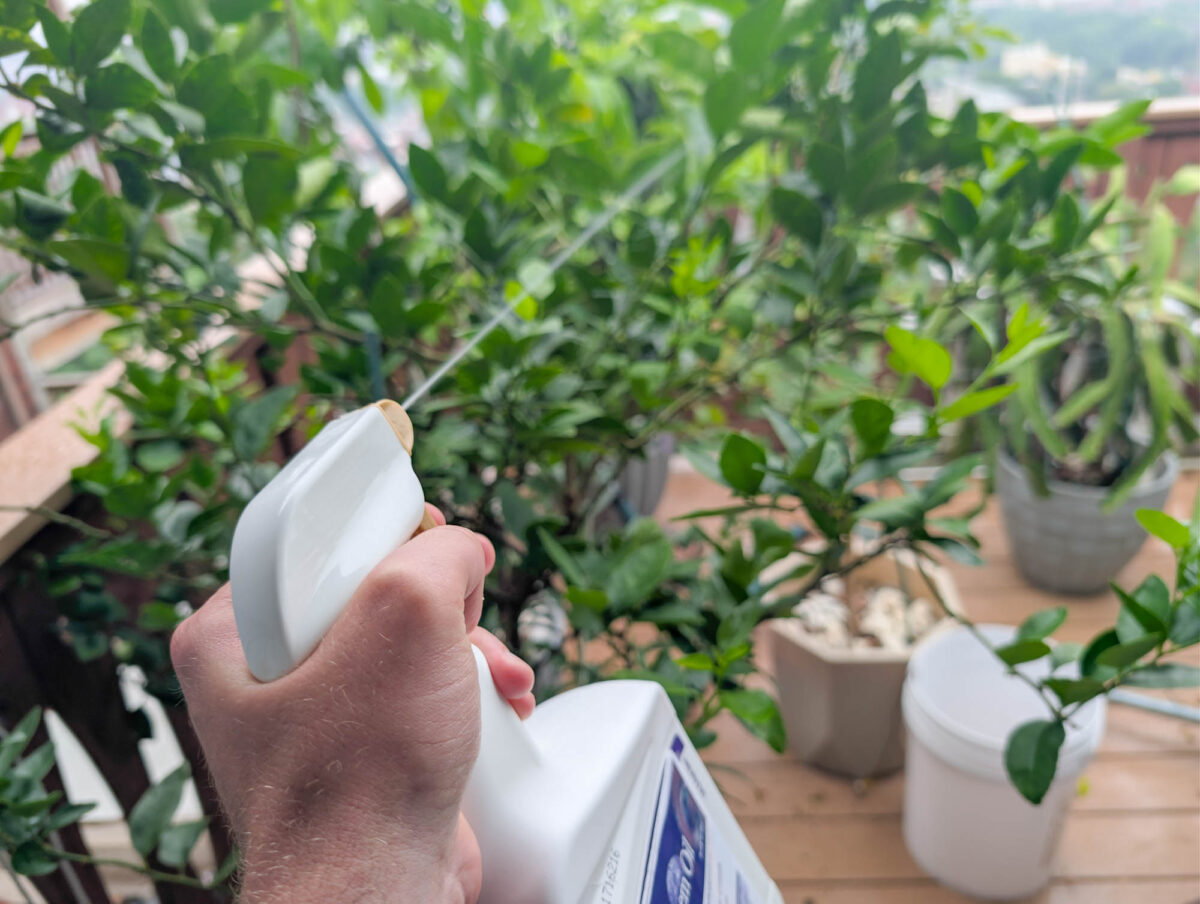
Based on the above observation, I realized I was perhaps having two issues with using pre-mixed spray bottles.
First, I really needed to douse my trees to see a benefit. This consumed the bottles relatively quickly, and I felt like I was burning through money, $10 at a time. Considering I have over a dozen fruit trees, this meant I was spending a lot of money when adding an appreciable amount of spray- getting just one or two applications out of a single bottle at best.
Second, when you look at concentrates with an industrial sprayer, most recommend using the mixed application within just a couple of days, as effectiveness seemingly drops dramatically over time once diluted.
Now, I'm sure some of these premixed sprays have some stabilizers or something added (I'd hope) to ensure they work long-term, but when a concentrate says effectiveness drops, it does make you wonder just how good premade sprays actually are.
Putting these two together really made me start to question whether or not the batched spray bottles were worth it. But ignoring effectiveness for a moment, there was a lot of waste from using one-time spray bottles, so even upgrading to reduce plastic consumption was enough for me to buy a sprayer.
Are Large Sprayers The Way?
But the concentration and effectiveness of the chemical itself is only part of the problem here- the application rate also poses several possible issues that are worth talking about more.
With a pre-made spray bottle, you tend to have two nozzle settings, which can either be a broader spray or a finer, more concentrated spray. Both work to some degree; however, in my experience, unless you're blasting a pest directly such that they're completely coated in liquid, the effectiveness of a general spray can vary wildly.
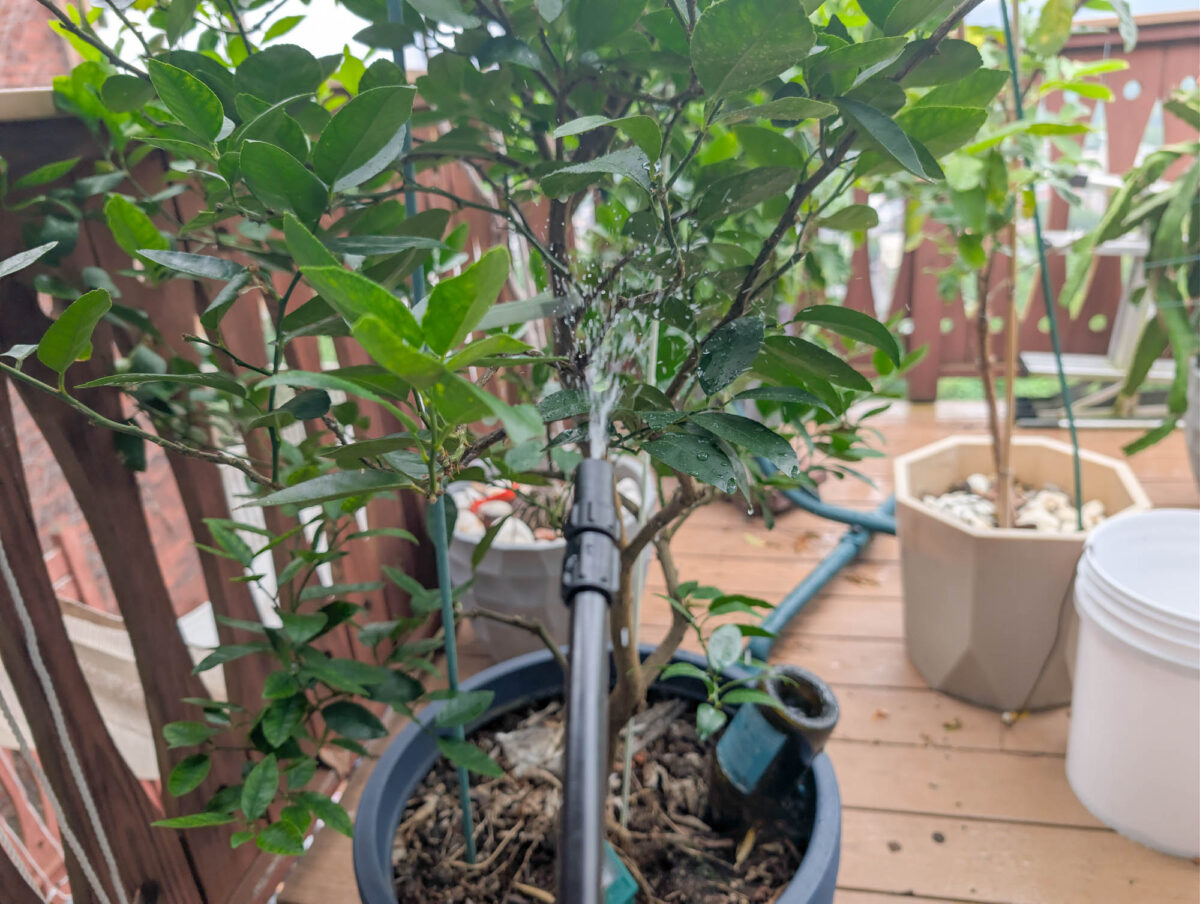
Larger sprayers, on the other hand, have a range of nozzle settings as well (both a broad spray and a concentrated stream), but the amount of liquid that comes out under pressure is much, much more. We're talking going from a little stream to a full-on, pressurized stream like from a squirt gun.
This may be an anecdotal observation here, but when it comes to appropriately coating leaves and, in some cases, even knocking pests off with the force of water outright, a pressurized pump sprayer runs circles around a conventional spray bottle, and the pest reduction I saw was notable due to higher application of Neem/horticulture oil.
But there was also a financial benefit here, because using concentrates like these is also quite cost-effective in the long run.
More Bang For Your Buck
Finally, there is the cost element that is hard to overlook. Pesticides, fungicides, and insecticides are expensive!
We've bought 32-ounce pre-mixed sprays in conventional bottles for about $10 each. But a concentrate, at around $20 per bottle, may yield up to 20 gallons (2,560 ounces) of mixed solution to spray on your trees. Throw on the nominal cost of a sprayer (under $20 in most cases), and in the first batch of a single gallon, you would already be coming out even (as one gallon would be equivalent to about four pre-mixed bottles- or about $40).
So, from a cost basis alone, a little upfront cost to buy a sprayer and concentrate goes a long way- you'll be saving money in no time. But, there is also a side element here worth discussing, and that goes back to the fact that these sprayers can be quite large.
Let's say you buy one $10 bottle of 32-ounce pre-mixed spray and use it across 10 trees. For $10, you have applied about 3.2 ounces of spray per tree with some nominal amount of effectiveness. But if you make a one-gallon batch from concentrate, using 1/20th of a concentrate bottle, for $2 per batch (ignoring the cost of the sprayer), you can apply four times as much product to the same trees for 80% less cost.
More pesticide or fungicide applied likely means better coverage, better efficacy, and, of course, money saved.
A rare gardening win-win-win!
So if you haven't upgraded to using concentrates and a garden sprayer for applying pesticides and fungicides, what are you waiting for?