

Disclaimers: Our site uses demographic data, email opt-ins, display advertising, and affiliate links. Please check out our Terms and Conditions for more information. To see more of our content, set us as a Preferred Source in Google.
When we decided to get into growing tropical fruit trees in containers, we knew we’d have to bring the trees inside for winter.
In being in Zone 6b/7, most of our citrus and other tropical plants cannot tolerate our winters, and have to come inside from roughly November to April/May every year.
We are fortunate to live on a south-facing hill that gets plenty of natural light, but we are aware that even the best windows in our house can only go far. So we supplement lighting with additional grow lights placed near the trees, particularly to provide extra light to the sides that are away from the windows.
After trying flexible grow light arms and vertical grow lights, we thought we’d compare the two here for those who may be deciding what is the best to purchase!
🪴 Grow Light Choices – A Quick Look
- Flexible Arms: Grow lights with flexible arms can be positioned to the exact location a tree may need supplemental lighting, but often have a limited output area
- Vertical Lights: Vertical lights can provide a larger area of lighting, but can be a fair bit more expensive
- Situation Specific: Both work well, but may have different features and price points that may make their use case vary to your own personal setup
Need to pick up some new gardening equipment? Click to shop today.
Flexible Grow Light Arms for Strategic Light
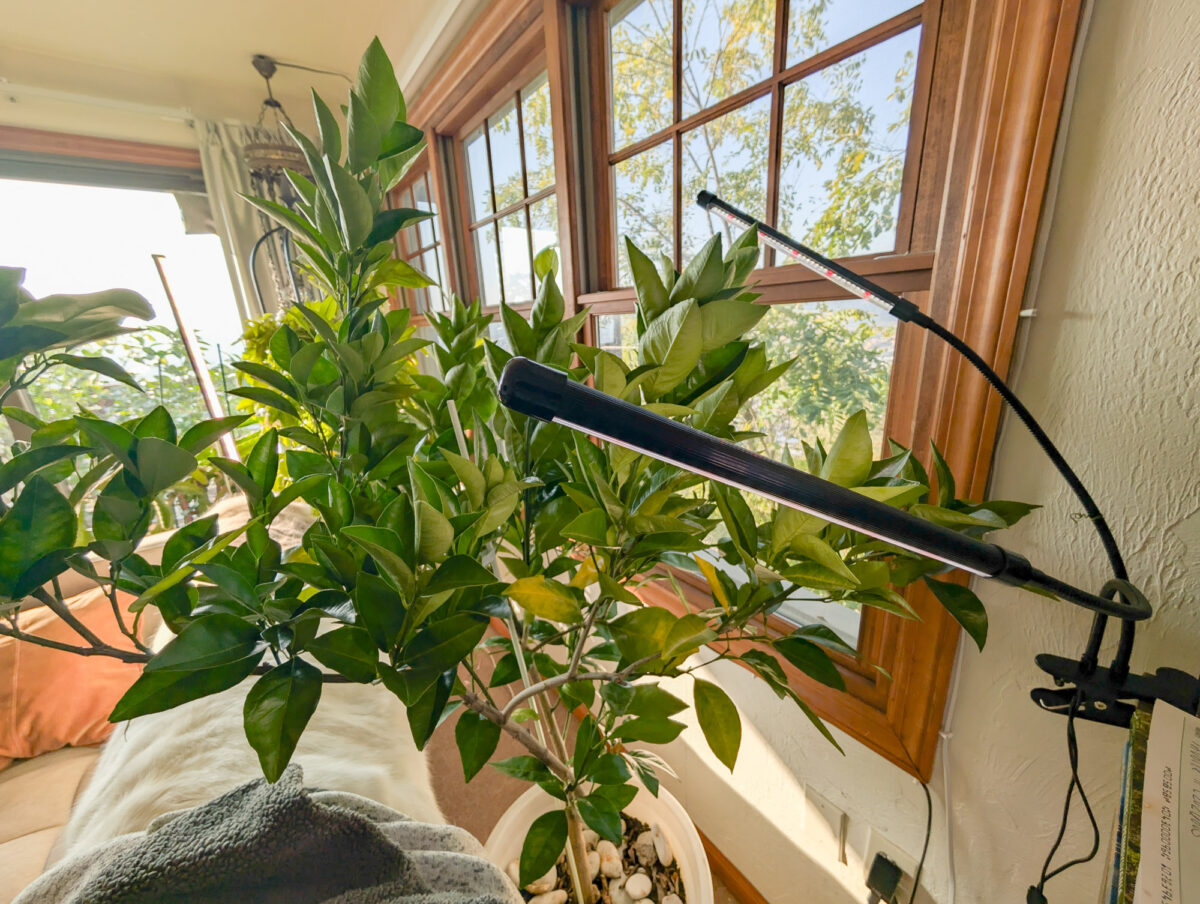
When we first started adding grow lights to our plant collection, primarily to provide supplemental lighting when our tropical fruit trees were indoors for the winter, we bought many flexible grow lights.
The primary reasons we started with these were twofold- they are cheap and can be positioned around a plant to provide targeted light in darker areas (read: sides of the trees that were away from windows). For several years, these worked just fine for our personal setup, if only because we get a fair bit of south/west natural lighting to begin with.
But two things about these were a bit bothersome to us, and that was namely that we had to have a lot of them all over our rooms, and we weren’t quite comfortable using them as a complete substitute to window lighting- so our plants ended up being quite crowded around said windows (so much so that I think their close proximity to each other also contributed to some pest problems we were having).
All told, they worked well for what they are, but we wanted to see if vertical lights may be a solution for a few of these issues we were having.
- Pro: Arm lights are flexible and can bend to provide targeted lighting to plants, typically come in multiple wattage outputs, and are fairly reasonable in price.
- Con: Most flexible arms are clip-on style which may limit where you can place them, and if you need several for many plants they can take up a lot of space and plugs. Some models may not include the ability to change light output wavelengths, have timers, or provide dimming options- so be sure to check extra features before purchasing.
Vertical Lights for Larger Coverage Area
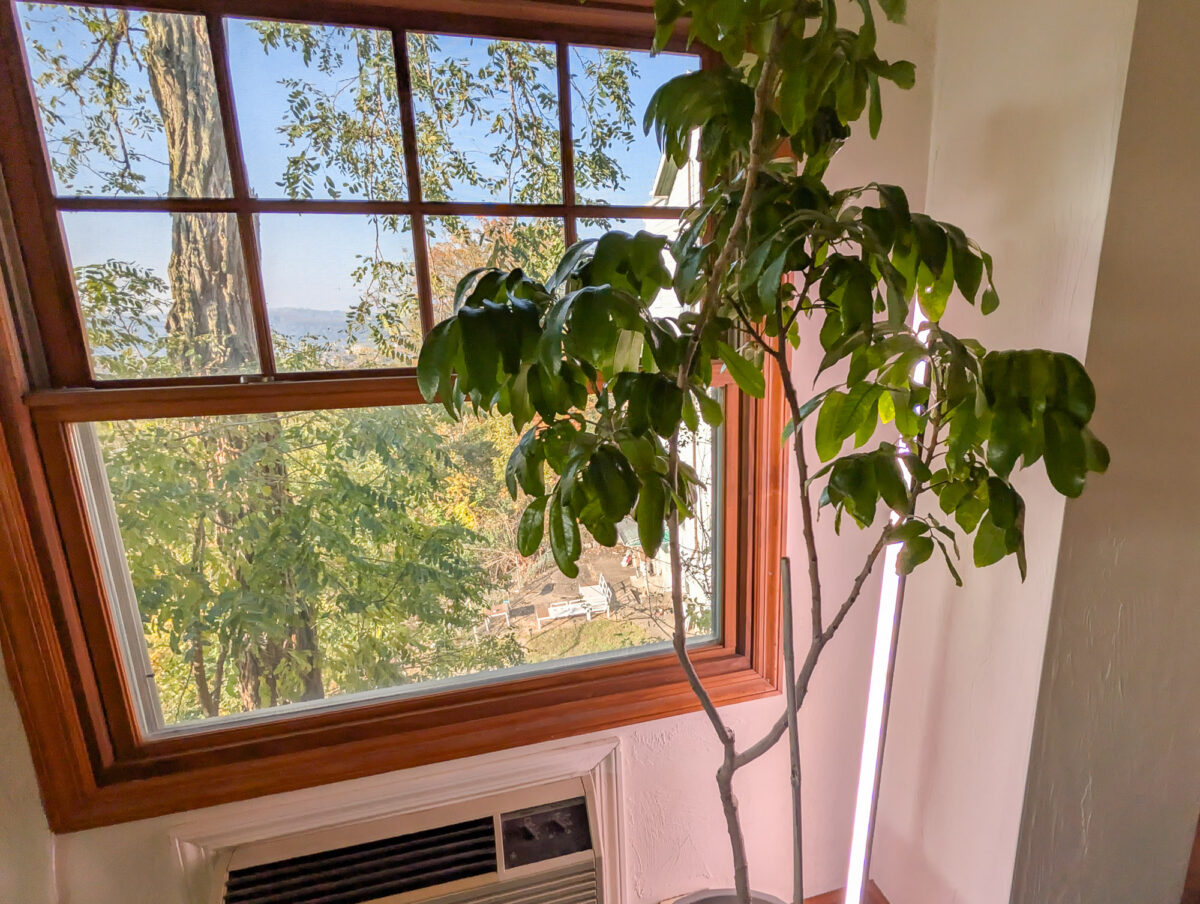
We more recently upgraded to vertical grow lights to try and address some of the issues we were having above- namely, I had too many plants near our windows and I wanted to spread them out into places in our house that do not get as much natural lighting otherwise.
Vertical grow lights were one solution we came across as we could get 60″ tall lights that illuminate a fixed area that seem powerful enough to offer enough light on their own without supplemental light coming in from windows. Since these are vertical lights on stands, we were not limited to where we could mount them and also spread our plants out in a better layout around our house.
We really like these because they’re also aesthetically pleasing; however, they do output a lot of light and are best positioned in places you don’t have to look at directly for a long period of time (I can’t have one facing my desk which is next to some trees, for example) and, naturally, they are more expensive as well.
That said, vertical lights provide consistent lighting output from their base to the very top of the device, so the available lighting area is significantly larger than a flexible arm light. A short plant of just a few inches in height and a tall plant nearing six feet positioned next to each other can receive equal lighting from the same device insofar as it is positioned properly.
- Pro: Vertical lights often provide better coverage of lighting in a fixed area and different heights are available depending on your needs (ours are modular in 15″ segments up to 60″, too). Many models come with adjustable settings for output wavelengths, have timers, and/or provide dimming features. They are also more aesthetically pleasing in our opinion.
- Con: Most vertical lights can be a bit more expensive than flexible arms, and some brands do not offer multiple wattage options. The are also a bit more expensive on average and may take up a bit more storage space when not in use. Our brand’s base also is not terribly heavy and can wobble if touched as well.
Which is Better? We Prefer the Vertical Lights
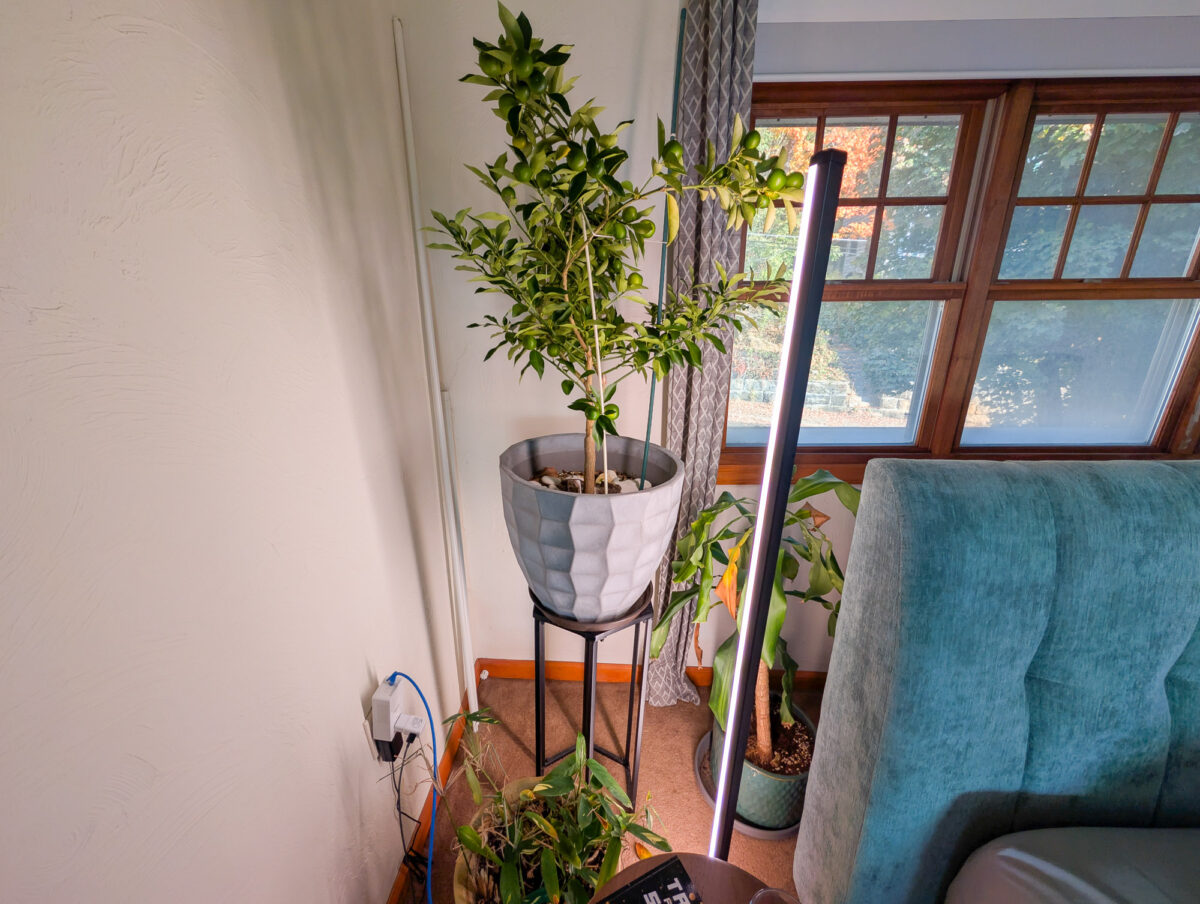
To be completely honest, there are pros and cons to both styles of grow lights and we could see going either way depending on your personal scenario.
I like the flexibility of adjustments with movable arm-like lights, which can provide close light coverage exactly where you want it. But I also don’t like how I needed to have a ton of them all over to cover my trees as they got larger (given that the lights are not terribly big themselves), and finding a place to clip them on could be tricky at times.
The vertical grow lights definitely seem to provide lighting in a far larger area, meaning they can provide coverage for more than one plant they are close together (noting that effectiveness does drop the further away from the light any plant is), but they are also quite expensive. It took a while for us to justify the price to upgrade, to be honest.
If you have a lot of smaller plants spread out over a wide area that need light, particularly supplemental light in addition to a window, I could entertain an argument that the smaller arms could be better for strategic placements if you only needed to provide light to a nominal area. You can get two or three for the price of one decently sized vertical light and call it a day. But if you value aesthetic simplicity, or have several plants in a single area that you need more robust lighting, the vertical lights are, admittedly, quite excellent.
Personally, I used lights on the flexible arms for several years to fill in the gaps that my south/west facing windows weren’t great at, and honestly kind of got sick of them after a while if only because it felt like I had lights everywhere- clipped onto the side of my desk, onto plant stakes, side tables, you name it. I also wanted to spread my trees out to parts of my house that have no natural light at all, and, so far at least, the vertical lights seem to be doing a good enough job providing all the lighting they need without a nearby window.
So, as I’ve said, it really depends. I’m really glad I upgraded to vertical lights, but your own circumstance likely matters a great deal here on what kind of lighting you may need as in some respects the vertical lights do indeed feel overkill, whereas the flexible arm lights felt like they weren’t doing enough. Just be sure to look into extra features like timers, dimming, and output wavelengths to name a few to ensure you give your plants the best light possible!
Do you have a favorite indoor grow light setup? Comment below to share!