
Disclaimers: Our site uses demographic data, email opt-ins, display advertising, and affiliate links. Please check out our Terms and Conditions for more information. To see more of our content, set us as a Preferred Source in Google.
When I wanted to expand my planted fruit tree garden on our hillside, I was limited on space relative to the sheer number of trees I wished I could plant. So, naturally, my first instinct was to look at combination fruit trees to get a little creative.
Combination fruit trees go by many names, and may be referred to as a fruit cocktail tree (with different species of fruit like lemons and limes) or a 3-in-1, 4-in-1, or even 5-in-1 fruit tree, typically with multiple varieties of the same fruit (like five different kinds of peaches).
There are many cons to these kinds of trees, I am not going to lie, but I took the risk on them for a 5-in-1 peach tree and a 4-in-1 cherry tree to help get more varieties in our limited space. In my research and acquisition, these are some important things you should consider before buying a combination fruit tree!
Looking to pick up a new tree? Check out Fast Growing Trees, where we buy our trees from!
🪴 Fruit Cocktail Trees – A Quick Look
- Same vs Different Fruits: Combination trees are often 3-in-1 to 5-in-1 style with multiple species grafted onto one rootstock, these can include different varieties of a single fruit (like a 5-in-1 peach tree) or different fruits (like in a fruit cocktail tree of lime, lemon, etc.)
- Growing Challenges: These kinds of trees have many growing challenges as grafts can fail, vigorous growers may choke out slower species, and the like- once a graft dies, it is not coming back and rootstocks are often non/poor-fruiting species
- The Same Fruit is Often Better: Combination fruit trees of the same fruit (like a 4-in-1 cherry tree) tend to do better in the long-run than mixed fruit trees, as even if a specific graft dies, you’ll still get your preferred- just be careful if you have one prized variety or if the fruit requires cross-pollination as dieback can hinder this
Need to pick up some new gardening equipment? Click to shop today.
Growing Rate Challenges
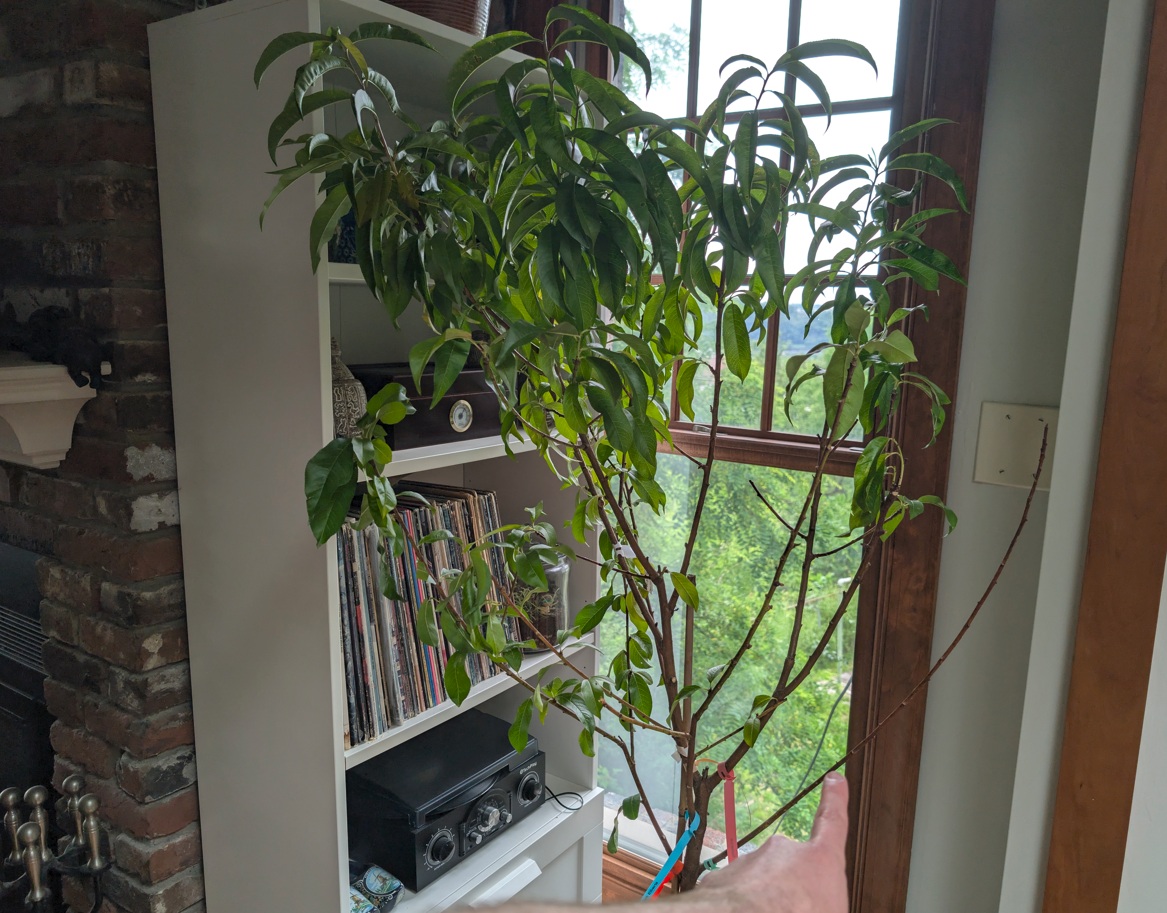
One of the most common complaints we have seen with combination fruit trees is that the species on the tree may grow at different rates. This is especially true with fruit cocktail-style trees that have different species (e.g., lemon, lime, kumquat, etc.), but can also be an issue with trees with multiple varieties of the same fruit (e.g., a 4-in-1 cherry tree).
Generally speaking, with variable growing rates of each species on the tree, you run the risk of one species/varietal taking over the tree. More branches, leaves, and fruit mean more energy to that specific part of the tree, and branches can and do choke out others over time.
To avoid this, judicious pruning is often necessary– often done not only to shape the tree, but to keep any branches that are a bit out of control in their growth, relative to others at least, under control. If you leave your tree to its own devices without holding its hand, especially early on, you run the risk of losing grafts and having your tree become one (or two) fruit dominant.
Grafts Can Fail – Survival of the Fittest
Now, different growing rates are just one issue. Branches (and, subsequently, entire grafts) can also fail outright. This could be due to a number of reasons, such as not keeping growth under control (as above) or simply conventional damage from weather, pests, animals, etc. Branches breaking off a tree and selective dieback are an inevitability, after all.
No matter the reason for a tree becoming damaged, combination fruit trees have one risk that single-varietal trees do not- once the graft is gone, it is gone for good.
As grafted cultivars are quite literally adhered to the base stock, that particular species of fruit can only grow from that specific branch or set of branches. So it should be no surprise that many gardeners who have combination trees report that they lose some fruit types over time. That five-in-one tree becomes four-in-one, becomes three-in-one, time after time. Even our 5-in-1 peach tree arrived with one branch almost completely dead back to the graft (just a node or two was green) with another failing right after planting, and while we dealt with that with the nursery directly, we were hoping that wouldn’t have happened for at least a couple of seasons, if at all.
- When buying fruit trees, especially combination fruit trees, you may do well to buy plants that come with an insurance plan. Fast Growing Trees replaced our 5-in-1 peach tree when two grafts failed right after we received it.
In a way, it is a bit of survival of the fittest, but in reality, you’re also playing with fate a little bit. What happens if the branch of your favorite fruit type fails? Well, it is gone from that tree forever, and whatever you end up with is a bit up to chance. If you purchased a 5-in-1 peach tree and don’t care about what variety may end up as a dominant producer? That may end up being no harm, no foul. But if you buy a 5-in-1 cocktail tree with plums, pears, peaches, nectarines, etc., and you like plums the least, well, you have to be okay with a greater than zero percent chance of being plum dominant over time.
So if a specific species of fruit is important to you above all others, you may be better off just buying that one as a single tree- you’re leaving a lot up to chance with a combination tree.
Fruit Set Variability – Does Each Graft Produce Similarly?
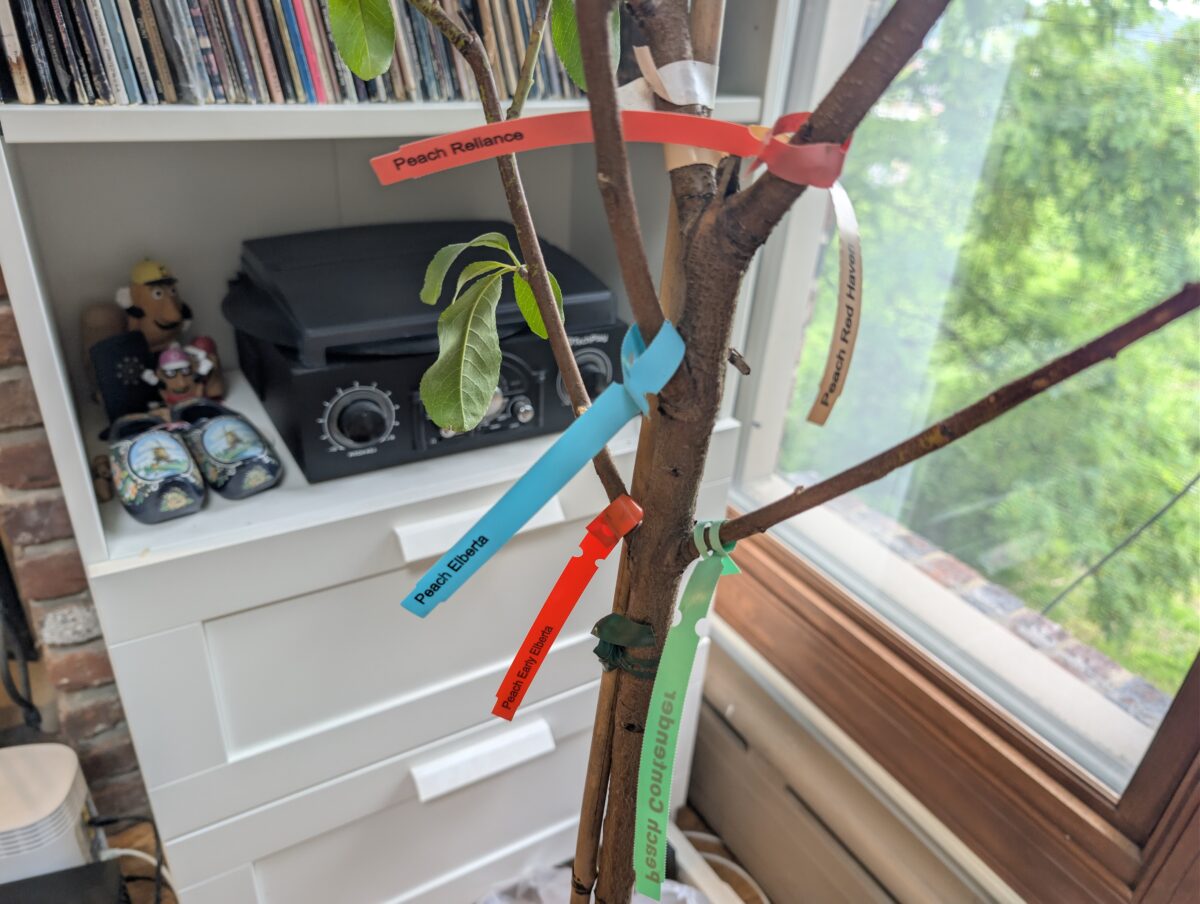
One big recurring issue we have read about with cocktail fruit trees is variable fruit set. One fruit type may be prolific, whereas the others produce much, much less. These can be due to a variety of reasons, with the number of grafts often less of a factor than the types of grafts themselves.
In many cases, fruit species can be self-fertile and can produce with just a single tree type present. But at the same time, it is an almost universal recommendation that having more than one tree aids pollination and increases yields. That combination tree may be helpful here if they are all the same species with similar flowering windows, as they would provide cross-pollination, but if you have different species that do not aid each other (or if they flower at different times), you aren’t getting that benefit.
Would you have a similar issue if you had just one tree of a single species anyway? Perhaps, but you’ll likely still have this issue with a fruit cocktail tree if all of the fruits aren’t able to cross-pollinate anyway.
- We purchased a 4-in-1 sweet cherry tree to pair with the mystery sweet cherry tree we grew from seed for the opposite reason. We didn’t know if the tree we grew from seed was self-fertile or not, nor the flowering window, so we bought a 4-in-1 tree as a hedge to have early, mid, and late blooming flowers to cover our bases. If we get bonus variety cherries on the combo tree, well, that’s just an extra perk. Suffice it to say, if you’re buying a tree that is not self-fertile, or as a second tree to aid in fruit set, keep the variability of flowering windows in mind.
Don’t Forget Chill Hour Requirements
Another reason for fruit set variability is that you may also need to ensure your tree meets the minimum chill hours for each species that is grafted. Generally speaking, many fruit trees require a number of hours below a certain temperature (typically 45 °F) during the winter to help trigger flowering. For example, apple trees often need 500 to 1,000 chill hours. Peaches can hit upwards of 1,000. We’ve seen some species of fruit trees needing closer to 1,500 hours, too.
To convert that for you quickly, 500 chill hours below 45°F would be about 20 days of that weather. 1,500 hours equate to over 60 days below that temperature. The good news is that these hours are cumulative and do not necessarily need to be consistent. A warm day here or there won’t be a problem insofar as the total number of hours over winter are below the target temperature, but for those who live in warmer climates, you need to be careful with this all the same.
If you have a multi-grafted fruit tree where some varieties require a large number of chill hours and some with low chill hours, and you do not meet the larger requirement, you may get a graft or two that produce flowers and some that do not!
- Minimum chill hours are different from cold hardiness- chill hours are the amount of time below a certain temperature to ensure buds come out of dormancy, while cold hardiness is typically the lowest temperature your tree can survive in without damage. Check both numbers for your area!
The Same Species May Be Better Than a Fruit Cocktail
One recurring trend we noticed in discussions about combination fruit trees was that, on average at least, it seemed like those who had combination fruit cocktail-style trees with completely different fruit species (e.g. plum, pear, peach, nectarine all-in-one) were less pleased than those with combination trees of the same fruit (e.g. a 5-in-1 peach tree).
In a way, this is likely a combination of many of the issues noted above.
If you have a fruit cocktail tree with many species, differing growth rates, graft failures, and fruit set variability can make a tree less prolific than you’d otherwise like. If you buy a five-in-one tree and you get mostly plums plus a handful of other fruits, well, are you getting your money’s worth when you could’ve just bought a plum tree? It really depends on your personal situation, sure, but hopefully you can see the drawbacks by now.
We chose to get a 5-in-1 peach tree for a few primary reasons, namely, we couldn’t decide on what species of peach we wanted, we wanted to extend our growing season of peaches in particular without multiple trees (and combination trees often have a mix of early, mid-season, and late ripening peaches), and, in all honesty, we were simply curious on what would happen. We bought our 4-in-1 cherry tree as a pollinating companion to another tree we had, whose flowering period we were unsure of, so the combination of varieties hopefully covers a wide range of conditions for cross-pollination.
We didn’t care as much if either tree suddenly became 4-in-1 or 3-in-1 or even lost all its grafts and became dominant within a single variety. Sure, it would stink if we ended up losing a peach we liked the most, but, hey, that’s the risk. We like most all peaches anyway, and bought the combination tree partly because we couldn’t decide on just one. Likewise, we didn’t care too much if the trees themselves aren’t as prolific as a single varietal tree, as most trees produce far more than what we would likely consume in a year anyway.
I could go on with these kinds of justifications.
If all that happens for a year or two is that the tree hobbles along, one or two varieties survive and dominate, well, are we really coming out that much behind throwing the dice and buying a single species tree? As long as the tree doesn’t die outright, we said no and figured it would be worth a shot.
But for you reading this, if any of the above concerns are serious enough to give you pause, take this as a sign to not buy a combination fruit tree and instead spend more time researching the specific fruit tree that would be the best fit for you. Otherwise, you may be taking a bigger gamble than you signed up for.
Did you buy a combination fruit tree or a “fruit cocktail” style tree? How is it holding up? Comment below to share!