

Disclaimers: Our site uses demographic data, email opt-ins, display advertising, and affiliate links. Please check out our Terms and Conditions for more information. To see more of our content, set us as a Preferred Source in Google.
After buying a bunch of fruit trees to grow on our hill, and even more tropical plants to grow in containers that we bring inside every winter, we thought it'd just be a waiting game until the trees matured enough to produce fruit.
For many of our fruit trees, vines, and bushes, this was exactly the case- they just needed time to mature into a fruiting plant.
But for some, they would flower, seemingly get pollinated, and the flowers would drop off time and time again.
If you are having this issue with your own fruiting plant, we have some things to look for that could explain why you are not getting fruit!
Note: Much of the logic below applies to many fruit-bearing plants be it a fruit tree, vine, cactus, or bush. Some of the factors below affect certain plant species more than others, so you may need to take a closer look at your specific plant variety to further diagnose the issue. That said, we're going to share some examples from the plants we have seen with these issues in our own garden all the same.
🪴 Why Trees Won't Set Fruit – A Quick Look
- Many Possible Issues: There are many possible reasons why a tree is not setting fruit, including being too young, having weather or pest concerns, not being self-fertile, or having nutrient imbalances to name a few
- Observations Matter: It can be difficult to pinpoint the exact reason why your tree may not be flowering, so careful observations around the flowering windows is a first step
- More Plants Never Hurt: In many cases, plants may be self-fertile and could set fruit themselves, but would do much, much better with a second tree if a similar, but different, species- expanding your garden never hurts
Need to pick up some new gardening equipment? Click to shop today.
It is Too Young
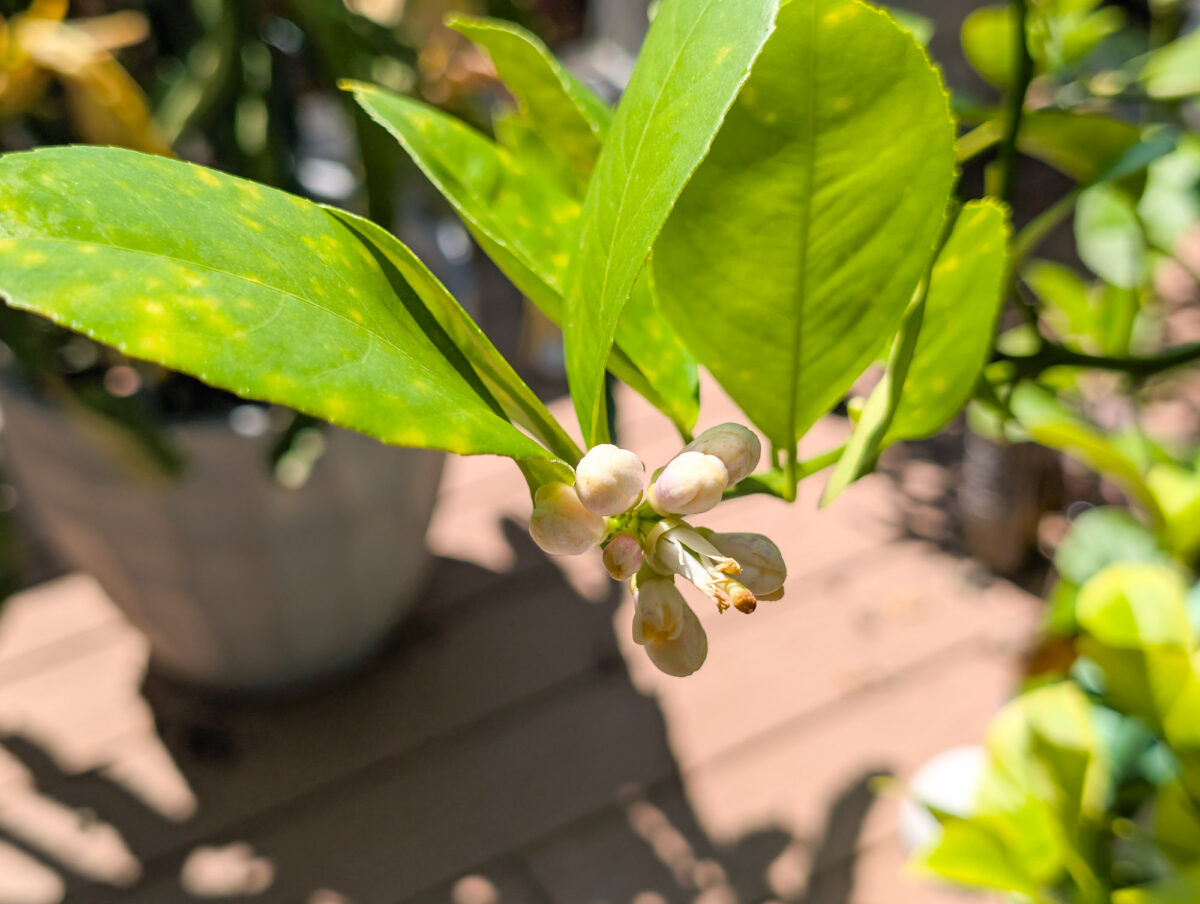
One of the first reasons why a fruit tree may not be setting fruit after flowering is simply that it is still too young to bear fruit.
Most plants require several years to grow until they reach maturity so that they can start to reproduce (via flowering and subsequent fruit set). These can be as low as just a couple of years for vines and cacti to three, five, or even seven-plus years for trees, depending on whether or not they were grown from seed or cutting, their initial size when planted, and your growing zone, to name a few.
For most of our tropical fruit trees, for example, we saw a trend happen. We would get a few flowers and get excited that it was finally mature enough that we might get some fruit. The flowers would open, bees would pass by, and they'd promptly fall off a few days later.
This could be a sign that your tree is simply still too young to bear fruit, and that the flowers were aborted because the tree just wasn't ready. In our lemon trees, for example, the first few flowers also lacked a stigma, and this was another sign that the tree is not yet mature.
In our experience, we'd typically have a batch of flowers without stigmas and would lose all the flowers. The next flowering cycle or two, we would maybe get one or two flowers with stigmas that would successfully pollinate (could be the same season, could be the next). Then, one season after that, our trees typically put out a conventional number of flowers, fully formed with stigmas, that would then pollinate and bear fruit.
Suffice it to say, the recommended timelines for fruit trees to bear fruit are there for a reason, and if you are seeing flowers arrive early, don't get too excited just yet- it still maybe too young.
Solution: If you think your tree may still be too young to bear fruit, this has an easy solution- wait another season or two.
It Has Nutrient Imbalances
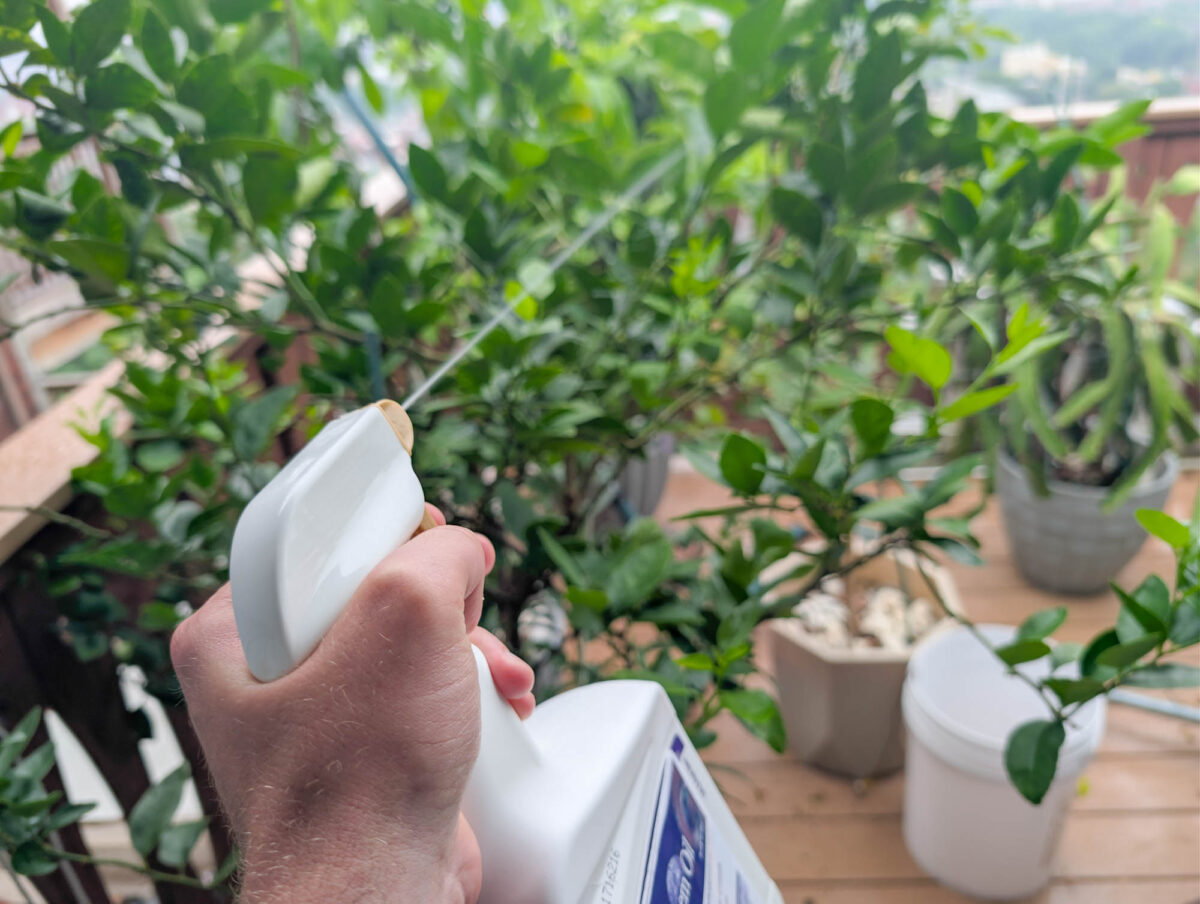
Another possible reason your fruit tree is not flowering or bearing fruit is a nutrient imbalance.
This one is hard to figure out without the ability to test your soil nutrients directly via a test kit.
To put it simply, most fruit trees alternate between green, vegetative growth and flowering / setting fruit. Broadly speaking, nitrogen is a nutrient that typically encourages green growth, whereas potassium is the dominating nutrient for flowering and fruit set.
So if your tree is sending out green leaves just fine and is not flowering, or is flowering but not setting quality fruit, you may be having a nutrient imbalance in this respect. We typically fertilize with a balanced citrus fertilizer several times in a season (giving macro NPK nutrients), but also periodically add a dash of 0-0-60 Potash into our watering can for a potassium boost to encourage flowering.
Solution: If you think you have a nutrient imbalance, you may want to test your soil and adjust your fertilization. In our experience, however, improper fertilization limits flowering outright over fruit set, but your mileage may vary.
- Pests can also cause flowers to fall off, too. We're going to lump this one into this category, if only because it is something you will need to observe directly and adjust your treatment plan accordingly. More or less, if your tree is stressed for some reason, flowers may not hang on!
Weather Concerns
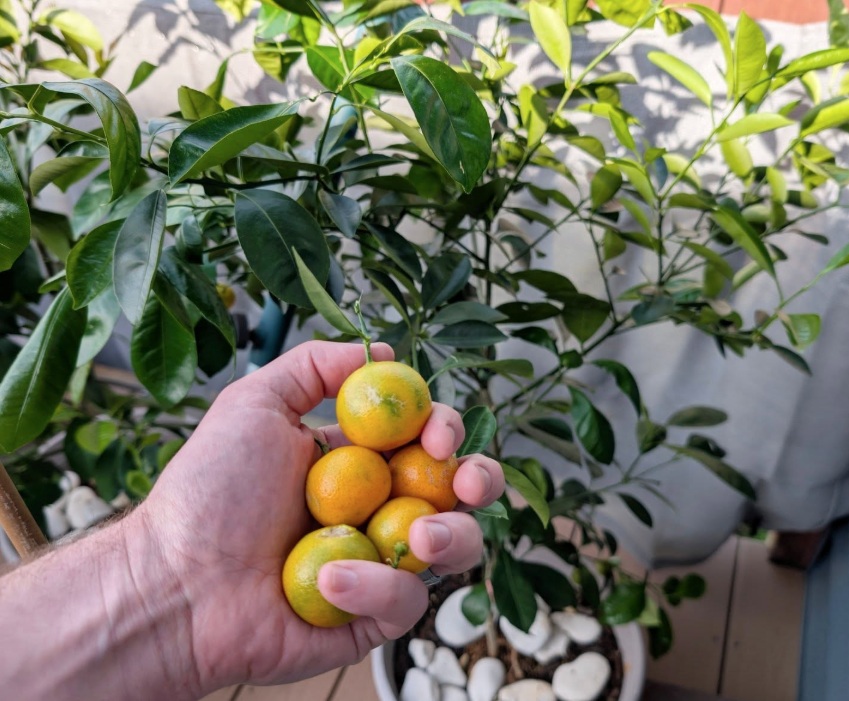
Weather can also affect fruit set for a number of reasons that may be plant-to-plant specific.
Some fruit trees require a minimum number of chilling hours during winter dormancy to flower (peaches, cherries, etc.). If you have too warm of a winter, your tree may not have hibernated enough to flower.
Frost can also kill flowers, which is also a common issue in cooler climates- lately, our local peaches and cherries in particular have had little to no yield because of late spring frosts.
Of course, there are other weather concerns to keep in mind, too- like perhaps rain during the limited window a flower is open that deters pollinators or a heat wave / cold snap causing flowers to drop, too. Then there is the eternal underwatering/overwatering debate, too.
Heck, you could also have a fruit tree that goes dormant in the winter, like our fig trees, and have set fruit that just ran out of time to ripen because it started getting cold- this happens all the time to us.
The sky is really the limit here– but thankfully, you can simply look outside and observe what is going on to get a feel if something is “off”.
Solution: Short of growing trees in pots and bringing them inside when the weather is poor, it is hard to do much to control the weather. You may want to hand-pollinate if you think pollinators are not coming to your tree, water if there is a drought, or cover the tree if a frost is coming, but, barring those, this may also just be a sign that it is what it is and one explanation for why fruit fell off more than a proper solution.
It is Self-Sterile
One big reason trees do not set fruit is that many species are self-sterile- that is to say, their flowers are unable to pollinate themselves and need another, unique tree flowering at the same time nearby to cross-pollinate.
When I grew a cherry tree from seed, for example, I did not know what the exact species was, as I threw a number of cherry pits into a communal bag, not realizing this concern at the time. As I found out that some sweet cherry trees are self-fertile (not needing another tree) while others require a second tree for pollination, I panicked. The tree was getting towards maturity, but I didn't want to risk it not fruiting at all when it started flowering, so I went the extreme route- I bought another tree.
Thankfully, some fruit trees can cross-pollinate with similar species. For example, many species of citrus are able to cross-pollinate with each other and produce their fruits just fine (the resulting seeds, however, may have new characteristics- many citrus trees are crossings of other varieties for this very reason). So you do not necessarily need two lemon trees or two lime trees if your ideal species is self-fertile (in our experience many are, though)- you may just need two different-but-similar species to get the job done.
Some fruit plant species can also be gendered. Some plants have only “female” parts, and others have only “male” parts. In this instance, you'll need at least one of each, and should note that “male” plants do not bear fruit- only successfully pollinated female plants do. Our cold-hardy kiwi vines are like this, and we have two male plants and three female (although most resources suggest one male can pollinate several females nearby). We aren't leaving anything to chance here.
If going down the multiple-tree route, it is imperative to know when the tree flowers, as unless you get extreme and collect pollen, both trees should flower at the same time for the best odds of success (naturally). When I purchased honeyberry bushes, for example, I found out that this species was self-sterile (needing another unique species to cross-pollinate) and different species had different flowering windows- early, middle, or late season.
So not only did I have to pick a different species of plant to help ensure cross-pollination, but I also had to be mindful of the blooming windows and select ones that would work best in my growing zone, too.
Solution: If your fruit tree is self-fertile, the only way you'll get fruit is if you acquire a second tree that is compatible with cross-pollination. Be sure to research which species can work together, if you need a male/female combo, and confirm typical blooming timelines to improve your odds of success. For smaller plants that require cross-pollination, like our honeyberries or cold-hardy kiwi vines, we tend to buy multiples of each to increase our odds of success.
Self-Fertile is a Relative Term

Finally, we should make one more note about trees that nurseries and online resources claim are self-fertile.
Many trees can be self-fertile, but often still do better with another species.
This is really a crapshoot unless you really dig into the weeds to find out what gardeners are seeing firsthand, because online resources like to be very, very generous with these claims.
For example, I can say without a shadow of a doubt that our self-fertile citrus trees produce like mad even if they're the only tree in our garden that is flowering at the time (like our self-fertile lemons, limes, calamansi, etc.). These need no additional assistance to set fruit even if we do have additional trees as a hedge.
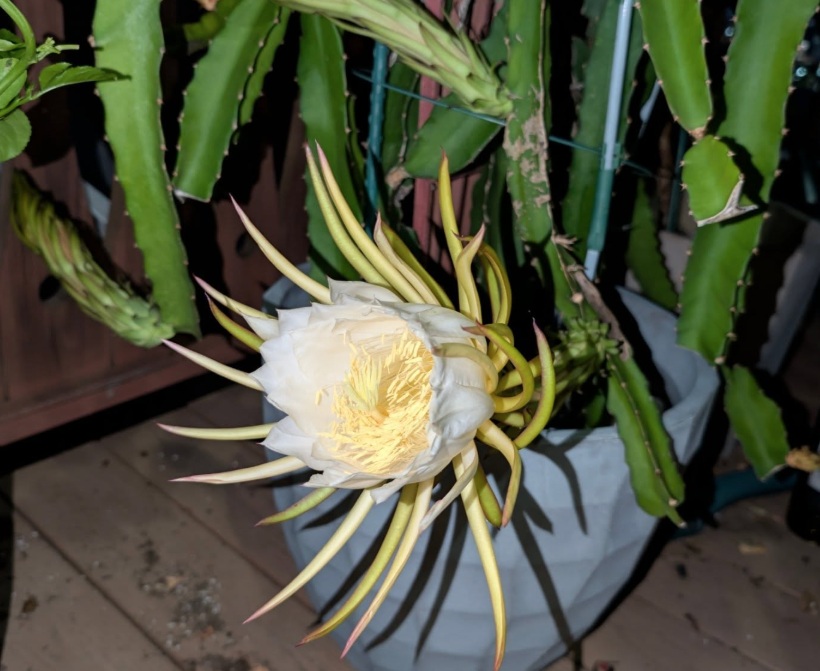
Others, like our dragonfruit cactus, are claimed to be self-fertile but have yet to set fruit during the flowering cycle at all, despite a few years of flowering (suggesting the plant is mature but aborting for other reasons). As we've come to find out, this is a common issue that growers have for these plants (our American Beauty cactus struggles to produce fruit, for example), and that while they are “self-fertile,” you may not get much of a yield, if any at all, without the pollen of another plant.
This is why we say the term “self-fertile” is relative. Yes, many resources claim a plant to be self-fertile, but, in reality, the inevitable caveat of possibly needing a second unique species to cross-pollinate does a lot of heavy lifting. This is why we decided to get two more dragonfruit cuttings, plant those side-by-side with our American Beauty, and plan to collect pollen for cross-pollinating when the time comes if they don't flower at the same time- we may not get any fruit otherwise.
Solution: This is our last point for a reason, because determining if your tree is self-fertile is likely best suited once all other options have been exhausted. If there is no possible alternative explanation (bonus if you can find other gardeners with similar issues), it may just be that your tree isn't as self-fertile as you would've hoped. Here, you need to make a decision on if you want to replace it with a species that is more self-fertile (I did this with a passionfruit vine that wasn't producing), if you want to add a second species as a hedge (like we're doing with our dragonfruit), or, in some cases, both (I ultimately did this with my passionfruit as a hedge, and its worked out great so far with fruit now producing and maturing just fine).
Overall, there is no one-size-fits-all reason for why your fruit tree, bush, or vine may not be producing fruit. These are, in our experience at least, five of the most common issues we've seen, and odds are good you fit into one (and in some cases, more than one) of the scenarios.
Have you struggled to set fruit on a tree or bush in your own garden? How did you fix it? Comment below to share the details!