

Disclaimers: Our site uses demographic data, email opt-ins, display advertising, and affiliate links. Please check out our Terms and Conditions for more information. To see more of our content, set us as a Preferred Source in Google.
After keeping potted citrus trees for several years now, with most starting to reach mature production (and a few others just starting to set fruit), we certainly have seen it all.
Overwatering? Yep. Underwatering our citrus tree? You know it. Citrus pests? Every single year. Rootstock attempting to overtake the grafted tree? That too.
Just when it started to feel like we got a handle on all of these issues, we ran into another one once our trees started to flower- our pruning schedule became more important than ever!
So in this one, we wanted to talk more about all the ways we prune citrus trees in pots, and highlight one very important detail that you should not overlook- do not prune new growth if you want fruit!
🪴 Pruning Citrus Trees – A Quick Look
- Pruning for Shape: Most conventional pruning recommendations note you should make seasonal pruning to shape your tree, get rid of diseased branches, pests, and the like
- Pruning for Fruit Set: You also may want to keep your pruning schedule in mind regarding fruit set, as most citrus trees tend to flower on new growth- cut that back, and you risk lowering your yield
- Potted vs Not: This is perhaps the biggest concern for those who keep citrus trees in pots, as we also often prune to keep the tree a manageable size- timing your pruning right is essential to have a bountiful growing season
Need to pick up some new gardening equipment? Click to shop today.
Pruning for Shape and Size – The Obvious Ways
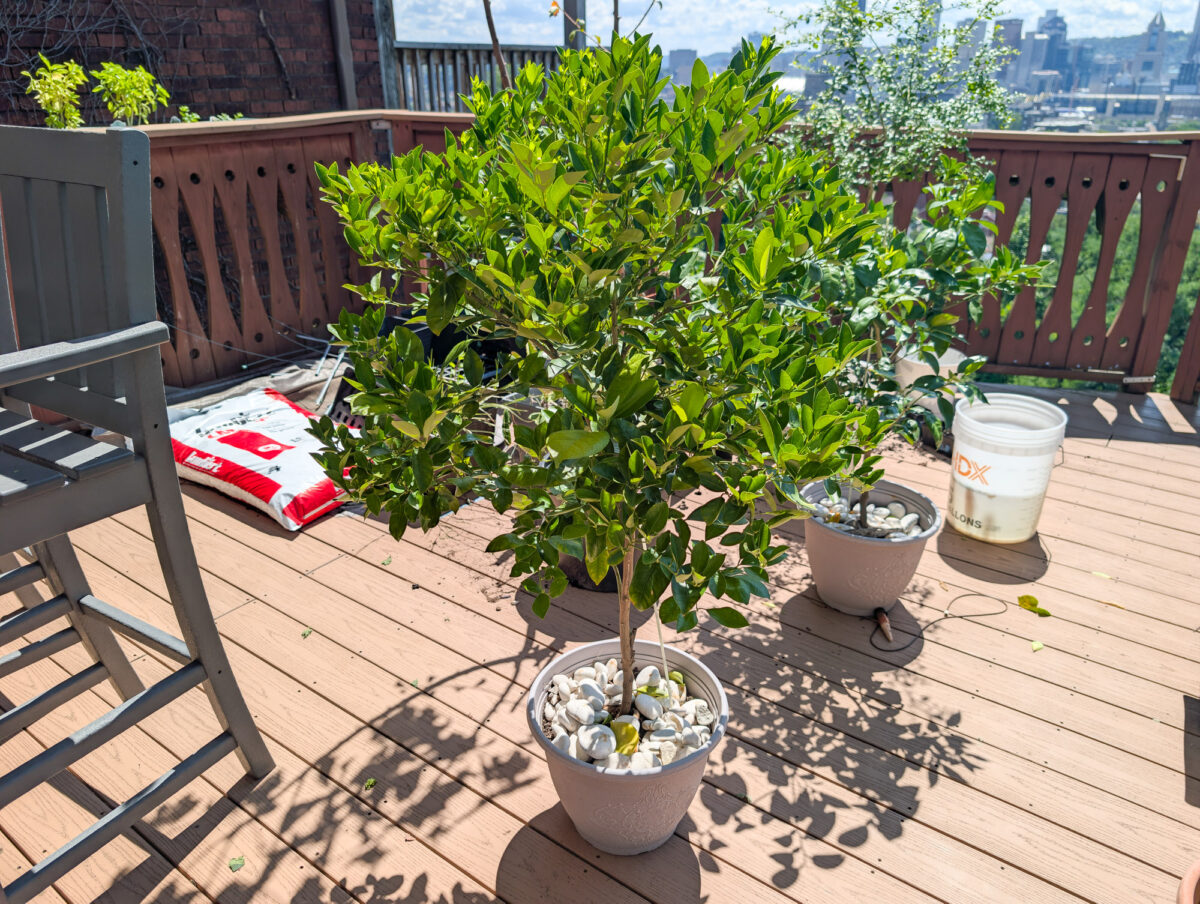
When you read about pruning citrus trees, the most common discussion that comes up is around pruning for shape and size.
This is done for a number of reasons, be it for aesthetics (if you want a stereotypical tree shape) and also to keep your tree’s overall canopy reasonable relative to your pot size. The latter is also done for a number of reasons, such as not putting too much stress on your roots (a contained root system and a big tree canopy may struggle), as well as helping balance weight (a massive tree in a small pot can become top-heavy and have balance issues- ask me how I know) to name a few.
There are, of course, other reasons why you would prune that are tangential to a shape and size conversation, too. These are common recommendations for other pruning scenarios, such as removing crossing branches, inward-facing branches, removing isolated pest infestations, and opening up the interior of a canopy that gets too dense for light and moisture concerns as well.
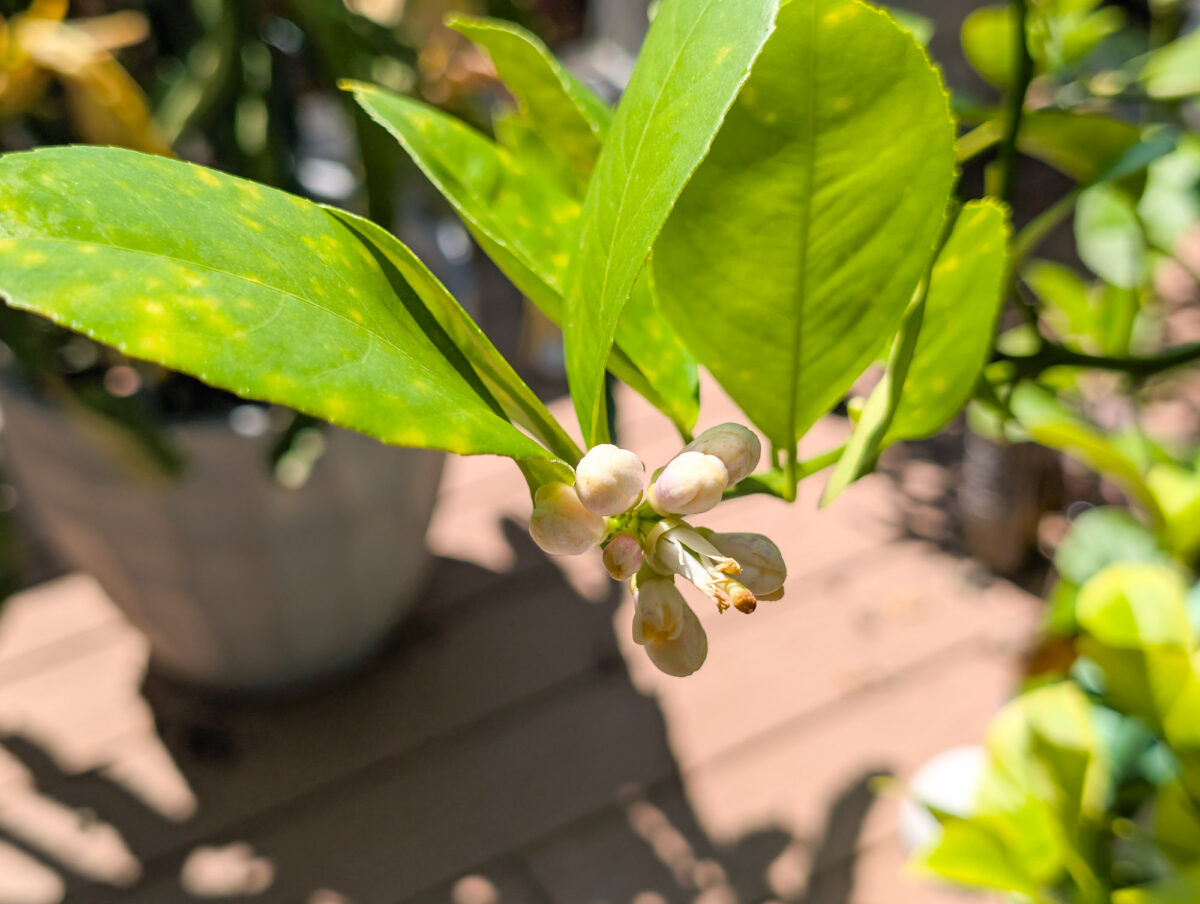
These are all excellent reasons why we prune citrus trees, and I engage in active pruning for all of these concerns throughout the year on an as-needed basis. But there is another reason why you will likely want to prune a potted citrus tree. It isn’t just for size and shape, but also fruit set.
This one often seems to be ignored a bit more in conventional pruning conversations, and we actually think this is perhaps one of the most important!
Pruning for Fruit Set – The Actual Goal
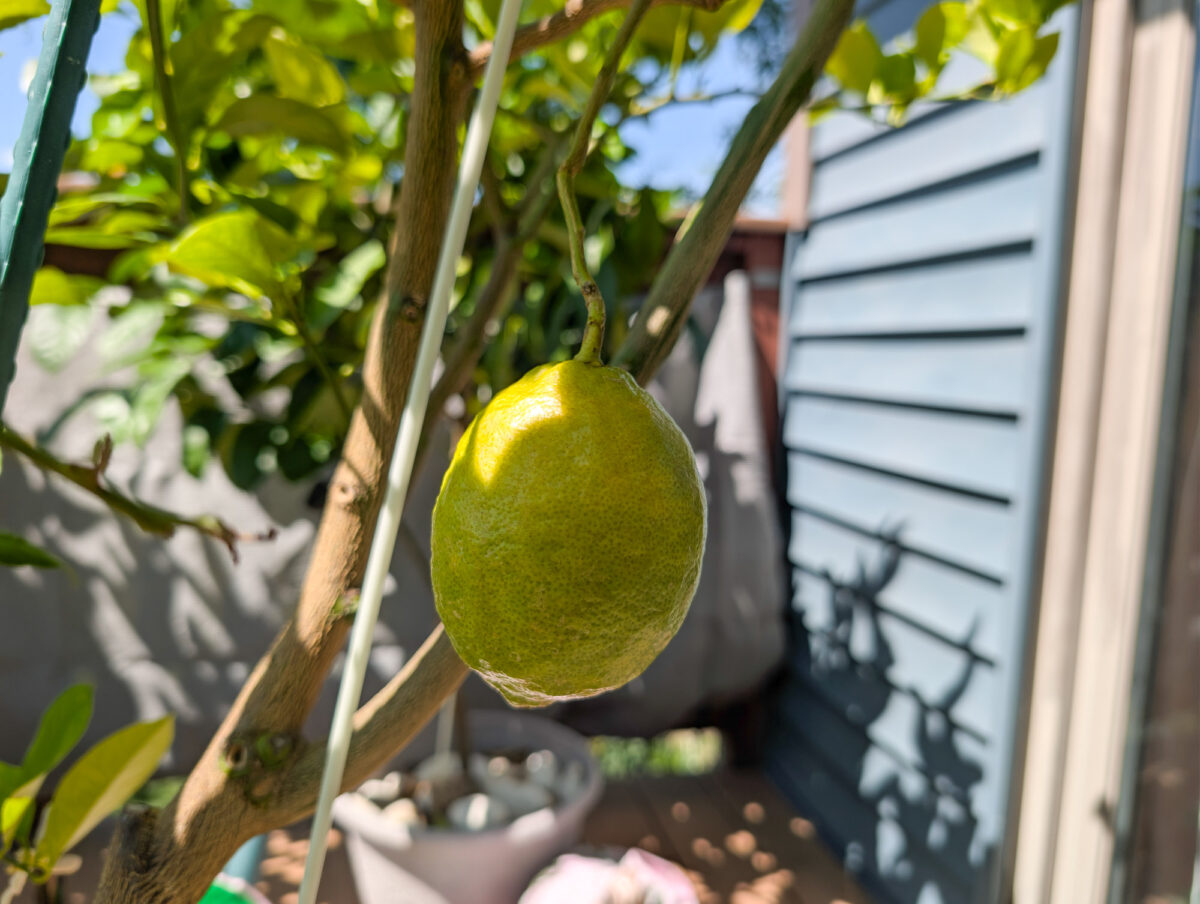
At the end of the day, we do not have citrus trees for their aesthetic. We want them for fruit! As such, you’re going to prune not only for the health of your tree (as many of the above cases address) but also to help it maximize fruit production!
This is where those who grow citrus trees in pots may run into an issue, because, as mentioned above, we likely can’t typically let a tree continue to get bigger and bigger and bigger. We have to keep it to a manageable size for whatever size pot we have it in. So let’s talk a bit more about the important considerations here as well.
The reason we have to think about pruning in relation to fruit set is that citrus trees tend to flower on new growth only. This could be new stems coming out of the ends of any branch (increasing your overall canopy size/shape) or any new growth along that branch going back towards the trunk (increasing interior canopy density).
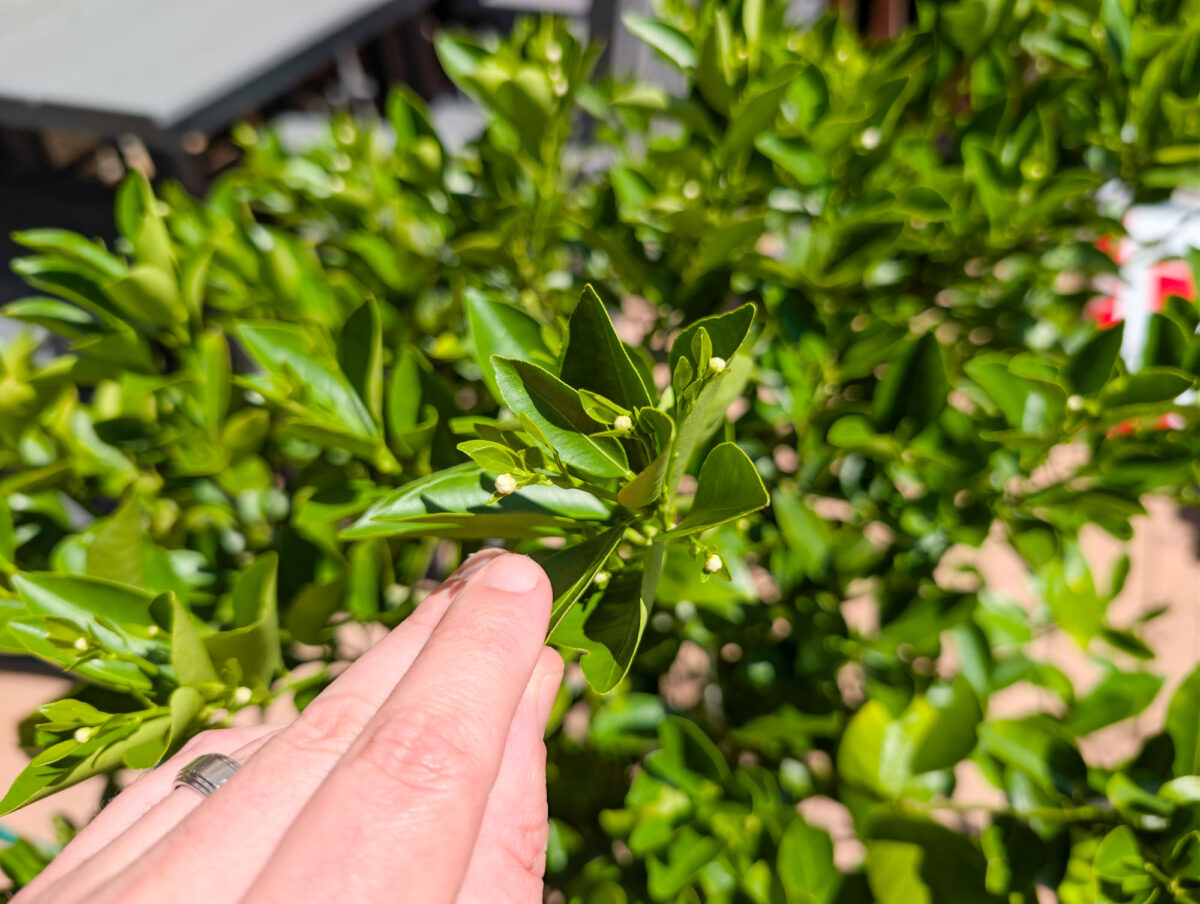
If you prune for shape and size as discussed in the previous example, you may see your plant explode with new growth, decide the tree is “too big” for your liking, get a bit too eager, and cut the canopy back or thin out the density on the inside before your plant flowers. This may reduce your fruit yield, as early pruning in this regard may inhibit flowering considerably during the season if you remove a lot of new growth.
As such, before you prune, you really should take into account flowering and fruit set schedules as well to prevent an early cut of a branch that would otherwise produce flowers!
- We recommend waiting for one flowering cycle to confirm your plant’s behavior. Most trees in the citrus family should flower only on new growth, but we cannot say we’ve personally verified this for every species. This is true for the trees we have in our collection, however.
When Should You Prune a Citrus Tree?
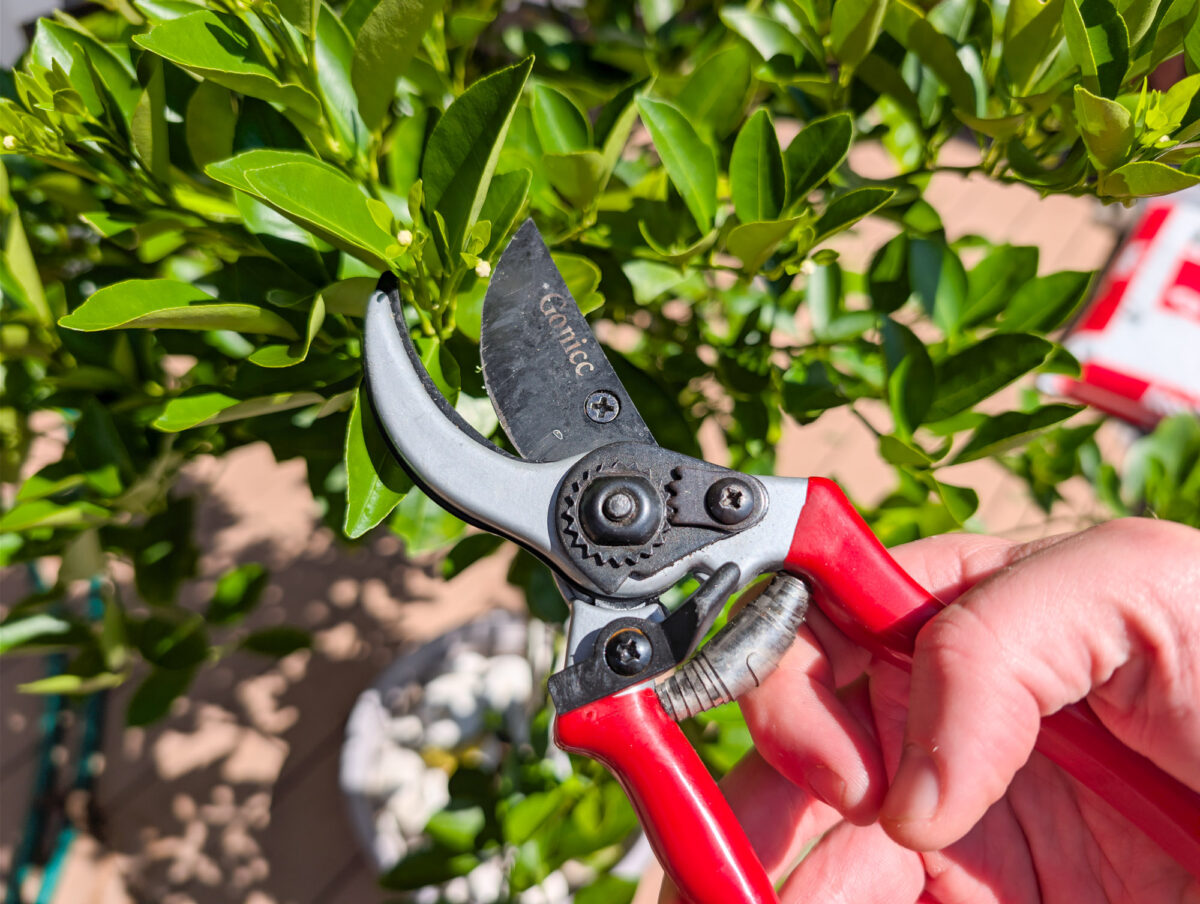
Ultimately, there is a reason why most recommend a pruning schedule in the winter after removing ripe fruit from the prior season- this is the period of a tree’s growth cycle where fruiting is done and is typically just before the next phase of new growth comes out.
You don’t want to cut back branches with fruit on them, obviously (well, unless you’re making a conscious decision to thin out too much fruit), and you don’t want to cut back new growth before it has a chance to flower at all- leaving late winter/early spring as the best candidate for substantial pruning.
That isn’t to say you can’t engage in some pruning during the growing season. We can and do open the canopy interior if we think new growth is too extreme in late spring/early summer. We also sometimes prune a little after fruit has set to help prevent crowding, pest, and disease issues. I don’t particularly want a large number of leaves draping directly onto my fruit, either.
These pruning choices may actively reduce our overall fruit yield, as we would likely be cutting back new growth in both cases. But at the same time, it is a calculated move that balances several concerns outside of fruit set. A reduction in overall fruit volume to improve overall tree health and/or fruit quality is a reasonable compromise, in our opinion.
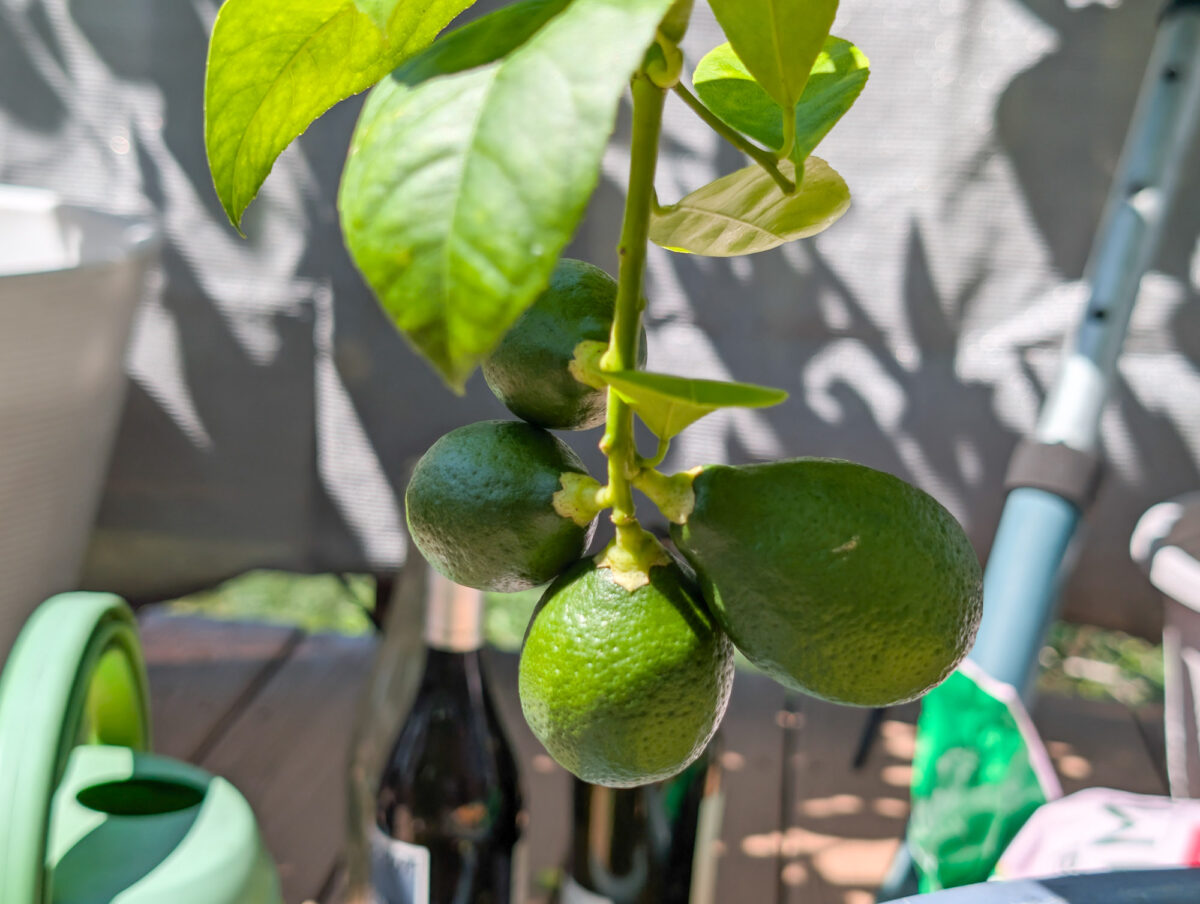
But what we do not want to do is substantially prune a citrus tree right after it sends out new growth in the spring before it flowers (particularly for shaping). If you were to cut all of your new branches back, you may have a scenario where you greatly reduce your flowering capabilities at the start and could wind up with a very poor (or delayed) fruiting year.
So, what’s our current process? Ultimately, we still go back to keeping our trees at an ideal canopy size for their respective pots, albeit with strategically timed pruning.
As of now, we engage in deeper prunings in late winter, after fruit has ripened and before new growth emerges. We trim our trees back to a size that is a fair bit under our ideal canopy size (several inches- we’re still working on the right balance here, though). This allows new growth to fill in over the course of a year without overtaking our ideal canopy shape, and helps decrease the need to further prune during the flowering season.
This lets new growth flower mostly unrestricted (albeit, we still do some pruning based on the other seasonal concerns mentioned above). The new growth also fills the canopy out back to our ideal max size. We then let the season run its course, and then repeat the process once again once flowering has ended in late winter the following year.
Is this a perfect model? We’re not sure. It is, naturally, just what we are doing right now. But since many sources often overlook the flowering concerns with pruning, we thought it was worth highlighting this consideration here all the same.
You really need to be mindful when pruning your trees!